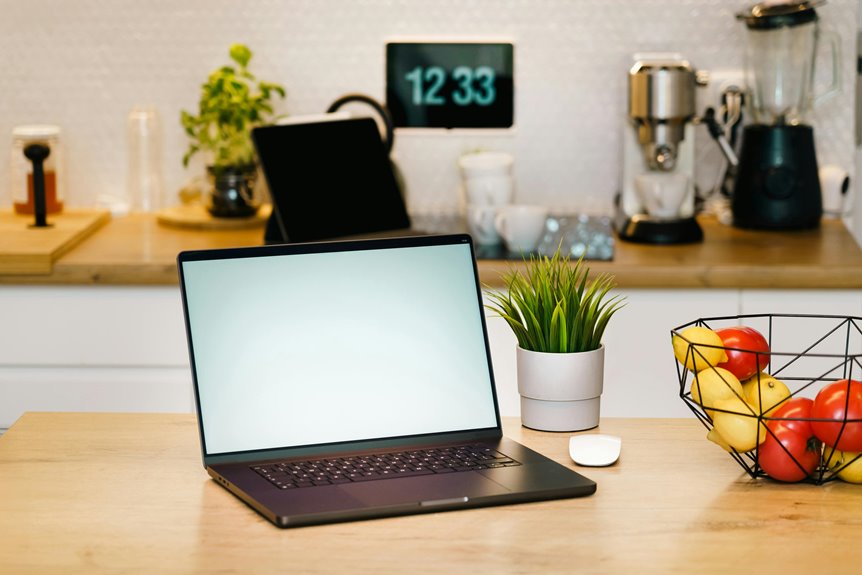
Kitchen desks aren’t dusty relics—they’re a practical solution for open-plan living. You get a dedicated workspace that doesn’t interfere with your cooking zone, keeping screens and paperwork contained in one spot.
Two-tone cabinetry, honey oak finishes, and matte textures create a contemporary look without clashing with your kitchen style.
Strategic placement near natural light and outlets keeps you productive while maintaining sightlines to dining areas.
The specifics matter: aim for 20–24 inches deep, 42–60 inches wide, with proper cable management hidden inside.
Stick around to discover how repurposing existing cabinetry opens up more possibilities.
Kitchen Desks Bridge Open-Plan Layouts and Focused Work
Why should your kitchen desk compete with your dinner prep? It shouldn’t. That’s exactly why kitchen desks are making a major comeback in 2026. You’re getting a dedicated workspace that doesn’t interfere with cooking—and your family gets you present during meal prep, too.
Open-plan layouts often leave nowhere to focus. Kitchen desks solve this problem. Integrated desk modules tuck into your existing cabinetry, creating a visual flow that works with your design. Your screens, chargers, and paperwork stay contained in one spot, freeing up your main prep surfaces.
The practical advantage? These work zones blend right in. They’re not awkward additions—they’re part of your kitchen’s design. You’re joining others who’ve discovered that having a real workspace nearby actually strengthens how you use your entire home.
Why Honey Oak and Warm Woods Make Kitchen Desks Feel Current
You’ve probably noticed that honey oak isn’t your grandma’s dated wood anymore—when paired with sleek matte finishes, it strikes that perfect balance between cozy and contemporary. The warm grain texture catches light differently than shiny surfaces do, giving your desk visual depth while cutting down that annoying glare you’d get from glossy finishes. It’s basically the bridge that lets you keep that inviting, lived-in feel without your kitchen workspace looking stuck in the past.
Warm Wood Grain Details
Honey oak’s warm wood grain creates natural depth in your kitchen desk, moving it beyond basic design. Those grain patterns catch light differently throughout the day, making your desk surfaces feel textured rather than flat.
Choose matte or satin finishes that let the wood grain shine without a plastic appearance. This keeps your desk vintage-inspired while remaining current for 2026.
Pair your honey oak with dark accents—chocolate-colored islands or brass hardware—for a traditional-luxe aesthetic. The warm wood grain becomes your design anchor, grounding the whole space in a style that works today.
Modern Matte Finishes Matter
While those warm wood grains create beautiful visual depth, the finish you choose matters just as much as the wood itself. You’ll want matte finishes over glossy alternatives—they’re becoming the standard in kitchen desk design for 2026.
Here’s why designers are making the switch:
- They hide daily wear – fingerprint resistance means your desk stays looking fresh between cleanings
- They feel sophisticated – matte surfaces give honey oak and warm woods that contemporary, upscale vibe
- They add texture – tactile surfaces create depth and visual interest that high-gloss simply can’t match
Matte finishes on textured surfaces reduce glare while maintaining warmth. Your desk design stays current without feeling dated. You get a practical surface that handles real life—homework, coffee cups, everything—without showing every smudge. That’s the modern kitchen desk difference.
Two-Tone Cabinetry Ties Your Desk to the Kitchen
How’s this for a kitchen upgrade? Two-tone cabinetry makes your kitchen desk work as a design feature. Pairing lighter upper cabinets with darker lowers—think white uppers paired with rich oak—adds visual depth while keeping your space bright and airy.
This approach works well for your kitchen desk. The color contrast separates your work zone from prep areas, making functionality feel deliberate rather than cramped. You’re clearly telling visitors, “Yeah, I work here, and it’s organized.”
Two-tone schemes use warm wood tones and matte finishes that align with 2026 modern-traditional design trends. Plus, darker lower cabinets hide wear and dirt better—a practical benefit you’ll notice daily. Your desk gains warmth and texture without overwhelming your entire kitchen, creating the balanced look you want.
Hidden Storage Solutions That Keep Kitchen Desks Organized
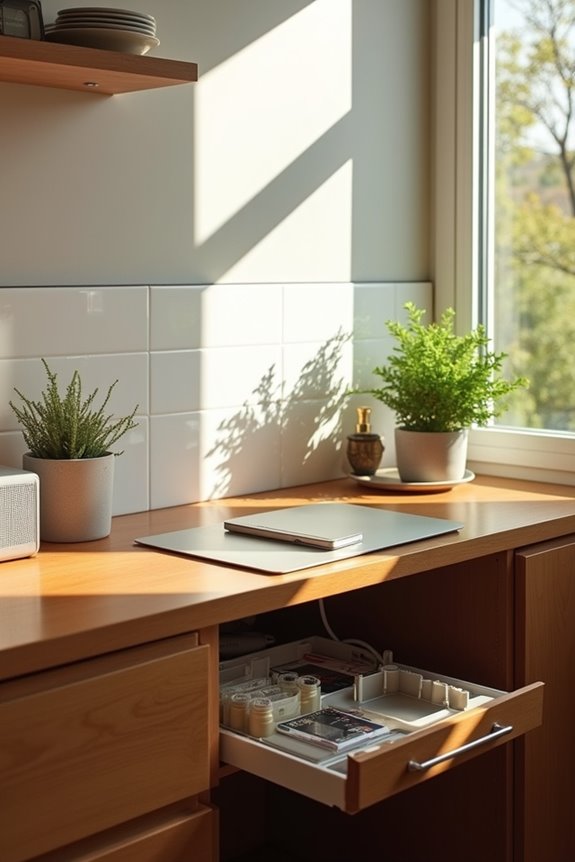
Your two-tone cabinetry looks sharp, but here’s what really works: hidden storage that keeps all your work stuff completely out of sight.
Two-tone cabinetry looks sharp, but hidden storage is what really works to keep all your work stuff completely out of sight.
You’ll find these practical solutions useful:
- Pull-out drawers and roll-out trays tucked inside kitchen desks that hide office supplies while maintaining your clean desktop appearance
- Compartments beneath panels and keyboard trays where chargers, cables, and paperwork stay organized and hidden
- Integrated cable management systems that keep tangled cords out of view while staying organized
Push-to-open hardware means you’re just one gentle touch away from accessing whatever you need. Layered cabinetry with disguised shelving lets you store medium-sized items while keeping a streamlined look. Your kitchen desk becomes an organized workspace where everything has its place—hidden but totally accessible. You’ll have the functional, organized workspace you’re looking for.
Hardware and Finishes That Connect Your Desk to Kitchen Style
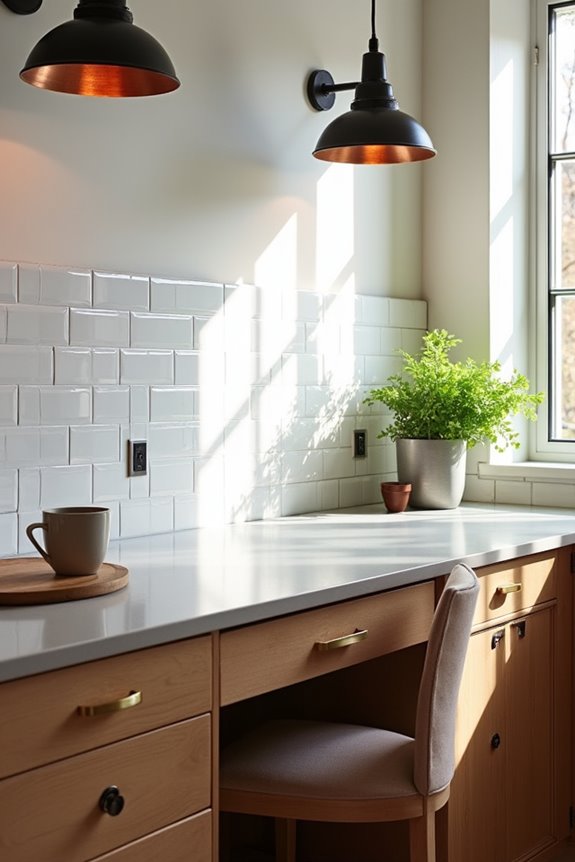
What really ties your kitchen desk into the rest of your kitchen? Hardware and finishes. You’ll want to match your desk-to-kitchen pieces with brushed brass or warm metal hardware that echoes your appliances and fixtures. This creates that cohesive, traditional-luxe vibe that works well in contemporary kitchens.
Mix knobs and pulls together—it sounds risky, but it actually adds texture and keeps things from looking flat and boring. Matte black or warm finishes on desk hardware work beautifully against wood-toned cabinets, adding depth without overwhelming the space.
The best part? Durable hardware supports your heavy desk work while blending into your kitchen style. You’re not just organizing—you’re designing a space where your whole life comes together.
Kitchen Desk Placement: Sightlines, Traffic, and Work Zones
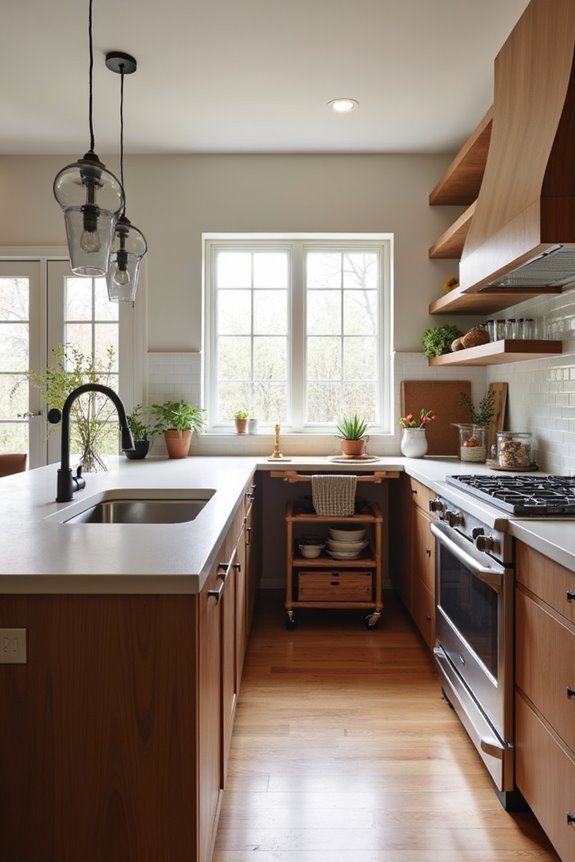
You’ll want to position your kitchen desk strategically so you can keep an eye on cooking and dining areas without creating traffic jams between the fridge, stove, and sink. The key is finding the right spot—usually 4 to 6 feet from heat and moisture sources—where you can work without your paperwork getting steamed or splashed. Think peninsula placement or a dedicated wall nook: you’ll maintain clear sightlines to your family while staying out of the way of kitchen activity.
Strategic Desk Positioning
Where you place your kitchen desk affects how well your workspace functions alongside your cooking flow. Strategic desk positioning means positioning your desk within the work triangle—that sweet spot between your stove, sink, and fridge—without blocking traffic.
Consider these placement essentials:
- Position near natural light to keep you energized while planning meals and paying bills
- Create subtle zone separation using a different cabinet color or partial island barrier that signals “office space”
- Integrate cable management discreetly so power sources and USB charging stay hidden from view
Your integrated workspace functions well when you can reach both prep zones easily. Place your desk where you’ll actually use it—visible enough to supervise cooking, tucked away enough to feel intentional. That’s when desk positioning establishes your kitchen as a functional command center.
Flow and Workflow Integration
How’s your kitchen desk going to work when you’re juggling cooking, paperwork, and people moving through the space?
Smart workflow integration means positioning your desk near the prep zone to minimize cross-traffic during meal prep. You’ll want at least 36 inches of clearance on primary corridors—42 inches if yours gets heavy foot traffic. This space keeps your sightlines open between cooking and dining areas, so you’re not blocked by island seating or tall cabinetry.
Desk integration works best when you maintain clear path lines throughout. A shallow-depth desk preserves your kitchen’s footprint while keeping everything accessible. Place it near natural light and charging outlets for maximum efficiency. When flow runs smoothly, you’re moving between tasks without constantly redirecting around obstacles. That’s what works.
Size, Depth, and Specs for a Functional Kitchen Desk
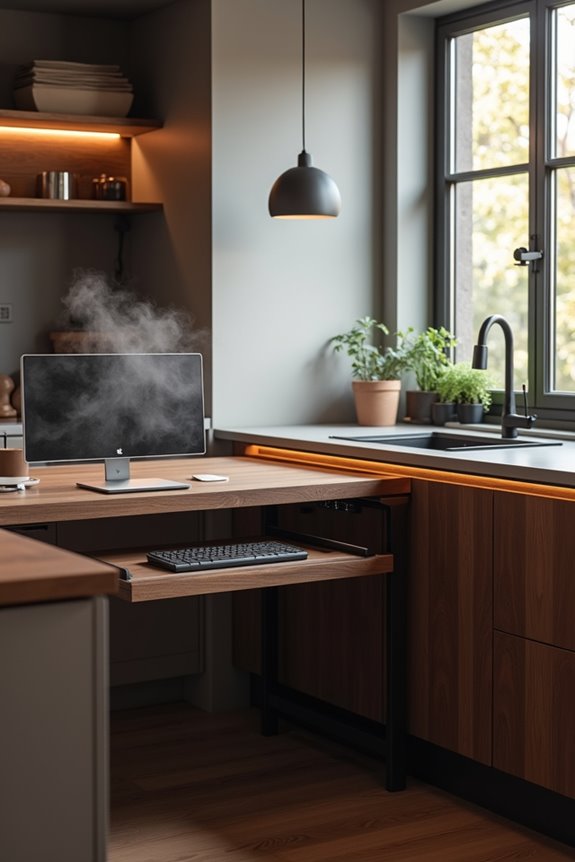
What makes a kitchen desk actually work in real life? You’ll want to nail the measurements so you’re comfortable working there daily.
Here’s what you need:
- Kitchen desk depth of 20–24 inches—enough space for your laptop plus actual elbow room
- 28–30 inches of knee clearance—no awkward leg-cramping moments when you’re sitting down
- Countertop height at 34–36 inches—matching your cabinetry keeps everything looking consistent
Aim for 42–60 inches wide so you’ve got room for a chair, writing space, and storage. Your integrated storage should include shallow filing drawers, small cubbies, and a pullout section (12–15 inches tall) for utensils or documents.
Don’t forget practical details: install at least one duplex outlet and add a recessed cable management grommet. These specs create the functional, welcoming kitchen workspace you’re after.
Transform Existing Cabinetry Into a Kitchen Desk
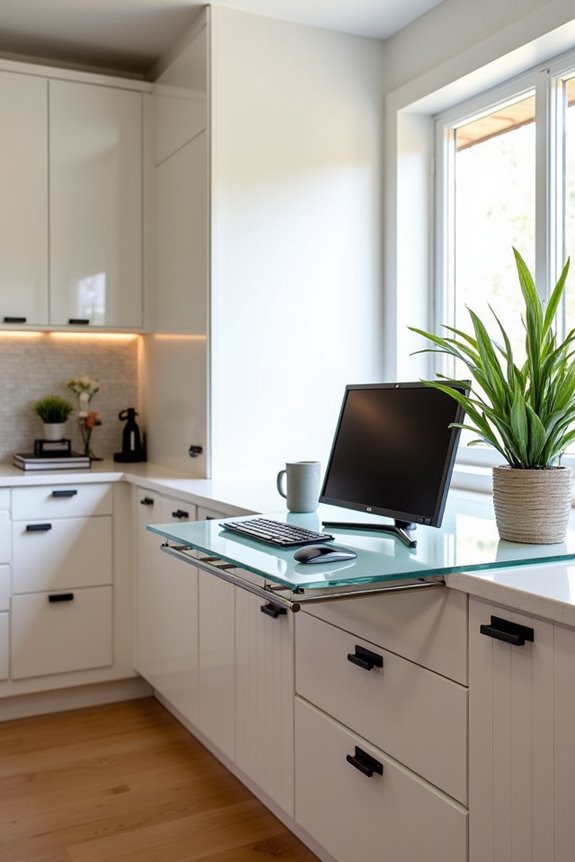
Already got cabinets you love? Convert them into your kitchen desk without a full remodel. You can use a base cabinet or upper section as functional workspace by adding a wide, flat work surface that matches your existing cabinetry style. Pair it with integrated shelving or open cubbies for a coordinated appearance.
Modular cabinetry lets you reconfigure this setup later without difficulty. Keep your desk visually distinct using a lighter finish or contrasting backdrop while maintaining overall depth consistency.
Address cable management by routing channels or adding grommets to hide keyboard cords and chargers. This prevents visual clutter and keeps clean lines intact. Your kitchen desk integrates both function and form, blending workspace into your favorite room.