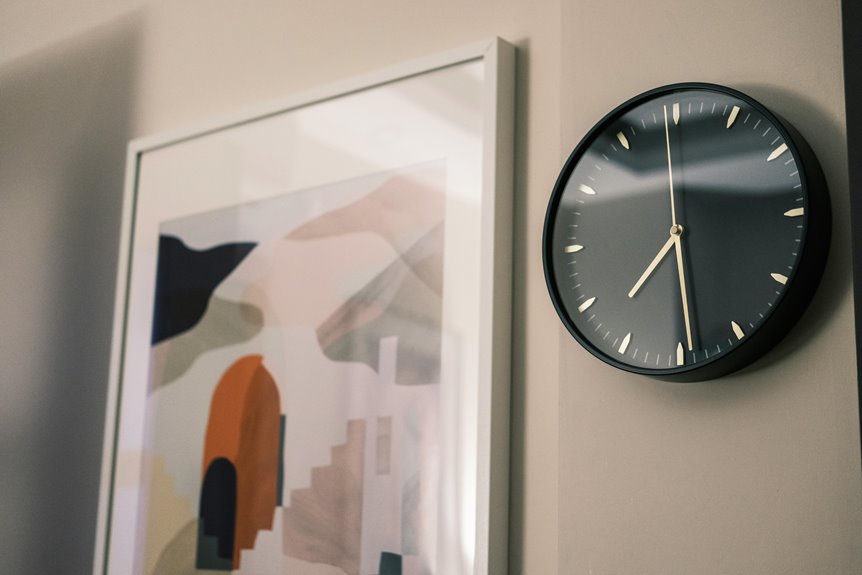
Start with oversized artwork or a gallery wall using cohesive frames. Size your pieces to match your furniture’s width—bigger is bolder. Add texture with tapestries and sculptures for visual depth. Position art at 57–60 inches high and install lighting to highlight details. Unify everything with 2–3 colors repeated across frames, pillows, and rugs. This approach creates a living room wall that appears well-designed and complete.
Start With a Focal Point: Gallery Walls and Statement Art for Large Walls
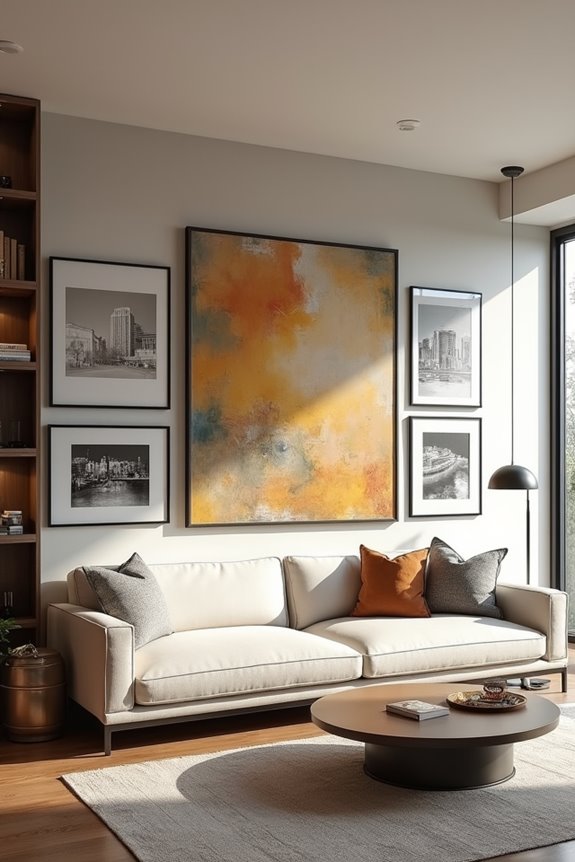
How do you prevent a huge blank wall from looking, well, huge and blank? Create a focal point. You’ve got two options: a gallery wall or statement art.
For a gallery wall, mix cohesive frames sharing a color or theme. Vary sizes—think three medium frames plus one tall piece—and keep spacing rhythm consistent using a gallery rail. This setup lets you rotate artwork as your tastes evolve.
Prefer simplicity? A single oversized artwork anchors the space beautifully. Then arrange two complementary pieces asymmetrically nearby for dynamic balance.
Here’s what works: pair bold, high-contrast pieces with subdued prints. This combination maintains visual interest without overwhelming your large wall. Either approach turns that intimidating expanse into a personal gallery that reflects who you are.
Size Your Wall Decor to Your Furniture
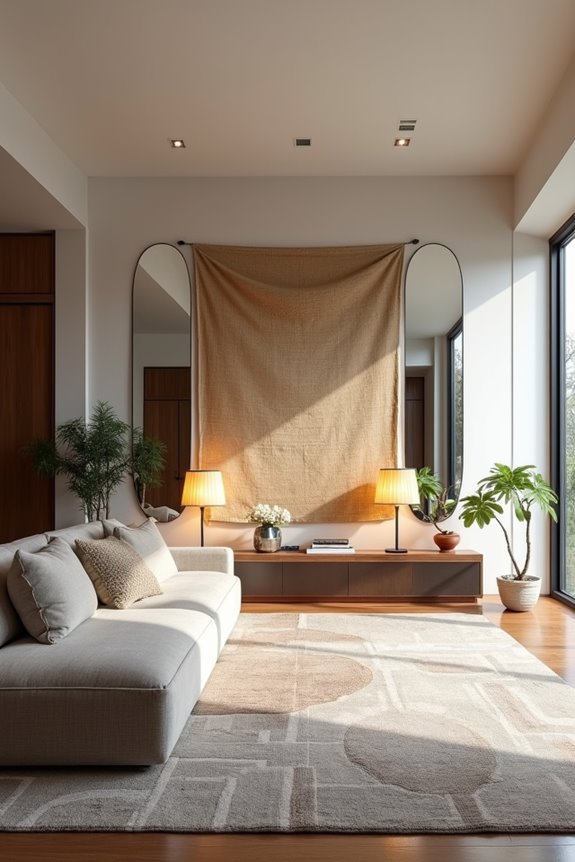
Why does your perfect artwork sometimes look lonely on a huge wall? Matching your wall art scale to your furniture width creates harmony in your room. Pairing a long, low-profile sofa with horizontal artwork achieves balance that feels deliberate.
For large wall decor, choose one or two oversized artwork pieces as your focal element. The artwork width should align with or slightly exceed your furniture dimensions. When grouping multiple framed art together, vary sizes and shapes while keeping frames cohesive.
Consider negative space—that breathing room around your wall art group matters. Aim for about 10–20% of empty space alongside your furniture’s visual footprint. For tall walls, select vertical artwork or stacked frames that echo your ceiling height, coordinating with your sofa’s proportions for complete vertical balance.
Add Depth With Textured Elements: Tapestries, Sculptures, and Tactile Finishes
Ready to add depth to your bare wall? Textured elements create visual interest on a large surface.
Here’s how to layer in dimension:
- Hang a tapestry as your foundation—it absorbs sound while adding immediate color and coziness
- Mount three-dimensional wall sculptures or reliefs that cast shadows changing throughout the day
- Arrange mixed textures like woven baskets, wood plaques, and fabric panels across your space
- Group pieces in a gallery arrangement for rhythm and balance without overcrowding
Pair these tactile finishes against neutral backdrops (beige or gray walls work well) so your textures stand out. This approach creates a welcoming, layered living room that shows who you are—and something your guests will notice.
Guide the Eye With Strategic Placement and Accent Lighting
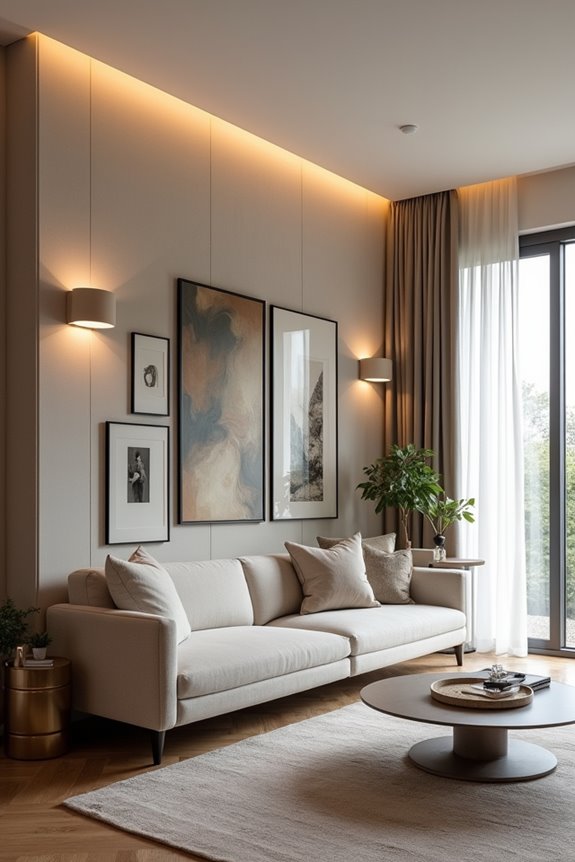
You’ve layered in beautiful textures—now it’s time to make sure your guests actually see them. Strategic placement keeps your large living room wall from being overlooked.
Position your eye level focal art around 57–60 inches from the floor—that’s where people naturally look. This anchor guides everyone’s gaze immediately. Next, install picture lights or wall lighting above your wall art to create a museum-quality vibe without harsh shadows.
Build a gallery wall with adjustable fixtures that highlight each piece’s unique texture. This reading rhythm keeps eyes moving, discovering something new around each corner. Finally, use dimmable lighting to control drama across your large wall decor. Dim it down for cozy evenings, brighten it for showcasing everything you’ve created. Your accent lighting isn’t just functional—it’s the spotlight your art deserves.
Unify Everything With a Color Palette and Pattern
Pick a color palette and stick with it like your favorite outfit. You’re creating a unified look that ties your spacious living room together. Start with a neutral backdrop—soft gray or warm beige works well—then layer in your repeating pattern through artwork, furniture, and accessories.
Your game plan:
- Choose 2-3 colors and repeat them across wall art, throw pillows, and rugs
- Introduce a bold pattern (geometric or botanical) in at least three elements
- Balance bold patterns with solids in matching tones for rhythm
- Pair large statement pieces with smaller repeats to guide visual flow
This color repetition creates visual movement throughout your room, making the space feel larger and more connected. Your large wall decor becomes the centerpiece, with everything else supporting its story.