You can create a nursery inspired by Where the Wild Things Are by starting with white walls and a bold blue accent wall behind the crib. Add one focal mural featuring Max and his wild friends to maintain a calm yet imaginative atmosphere. Choose convertible furniture in neutral wood tones that grow with your child. Layer soft textures—plush rugs, knit throws, and fabric banners—around rustic wooden accents. Include dimmable lighting and a statement rocking chair. This balanced approach brings wonder to your space without overwhelming it, with many additional options to consider.
Choose a Modern Color Palette Inspired by the Book
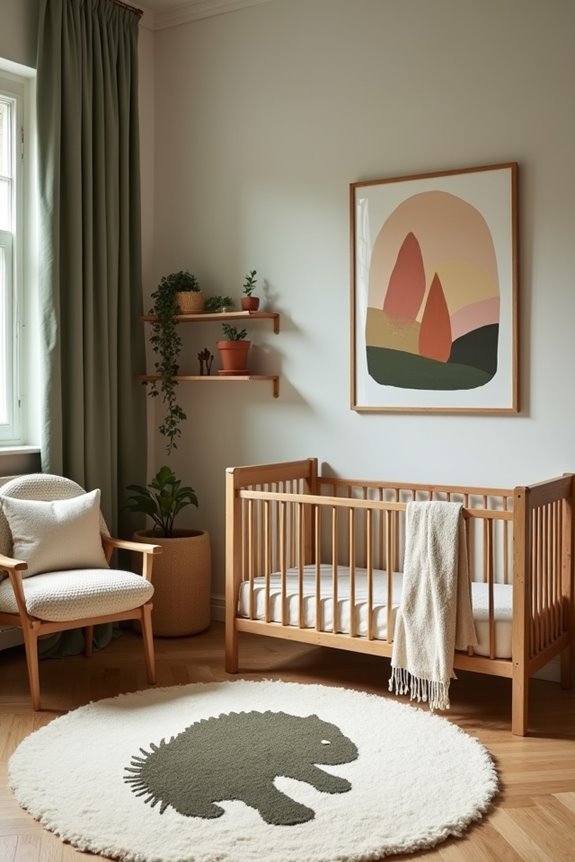
Want to create a nursery that captures the wild spirit of Max’s adventure without turning the room into total chaos? Start with a clean nursery color palette featuring white as your foundation. Keep your white crib front and center—it’s the perfect canvas for everything else. Now for the fun part: add a blue accent wall behind the crib or along one side. This gives your space personality without overwhelming it. Complement that blue accent wall with soft yellow and gray touches through bedding, artwork, or a patterned rug. These colors echo the book’s illustrations beautifully. The key? Balance colorful elements with calm, minimal decor. Your space stays peaceful while still celebrating Max’s wild rumpus. You’ve created a room that feels both modern and storybook-magical.
Design an Accent Wall Featuring Where the Wild Things Are
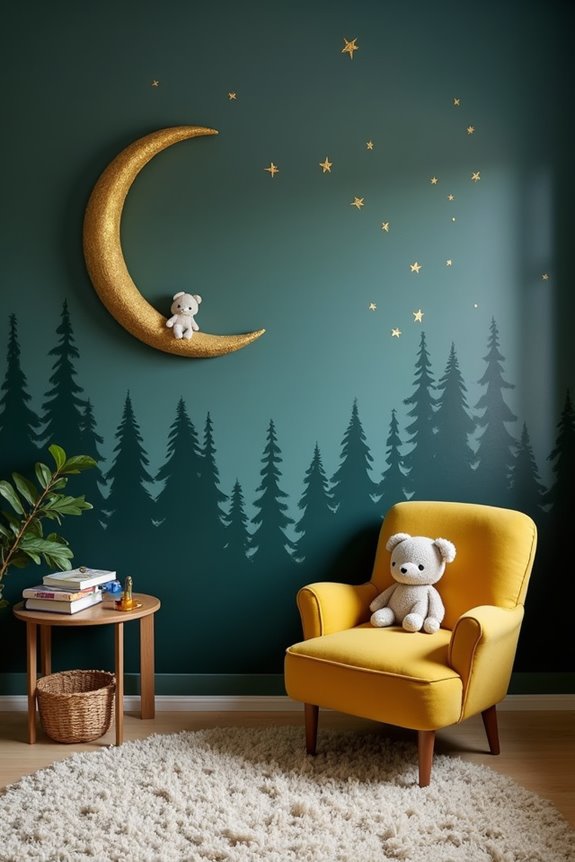
How’d you like to create a focal point that’ll make your nursery memorable? A reclaimed wood accent wall brings serious character to your space. Position your crib directly against it, making the wall the visual centerpiece that anchors the entire room.
The rustic texture and warm tones of reclaimed wood complement Where the Wild Things Are nursery decor. You’re not just creating a pretty backdrop—you’re building something that grows with your child. As they age out of infancy, this wall remains relevant and stylish.
Keep surrounding furnishings clean and minimal with white pieces. Add a custom two-tone rocking chair for visual interest without cluttering the scene. This balanced approach keeps your accent wall as the primary design feature, creating a space that feels both classic and deliberate.
Select Furniture That Grows With Your Child
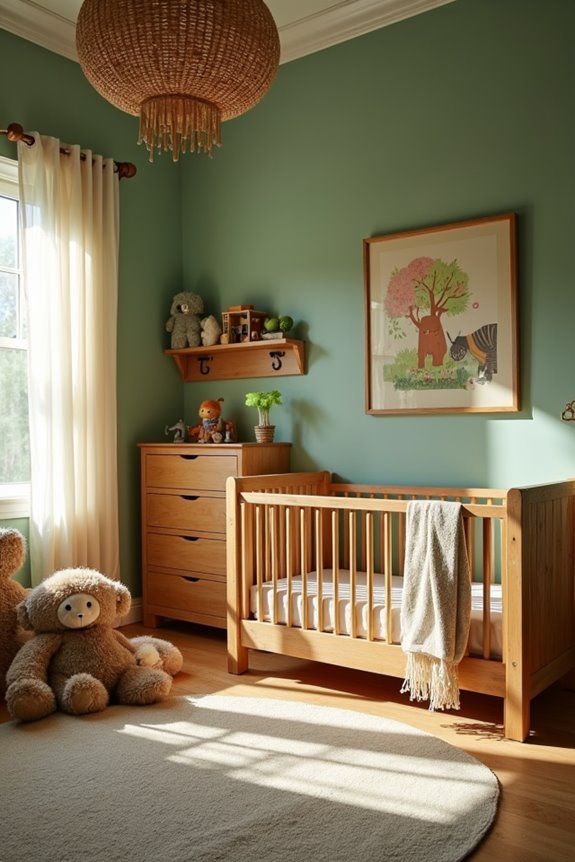
Why settle for nursery pieces you’ll outgrow in two years? Smart parents invest in nursery furniture longevity by choosing convertible options that adapt as their kids grow. A convertible crib transforms into a toddler bed, then a full-size bed—saving you hundreds of dollars. Pair it with a dresser that doubles as a changing table now and storage later.
Stick with timeless wood tones and neutral whites rather than theme-specific designs you’ll eventually tire of. Select pieces designed for easy repainting or reupholstery, so you can refresh the room without replacing everything.
Consider timeless storage solutions like open shelves and labeled bins. They’ll organize baby gear today and your child’s books and toys tomorrow. You’re building a space that grows with them.
Choose a Statement Piece to Ground the Room
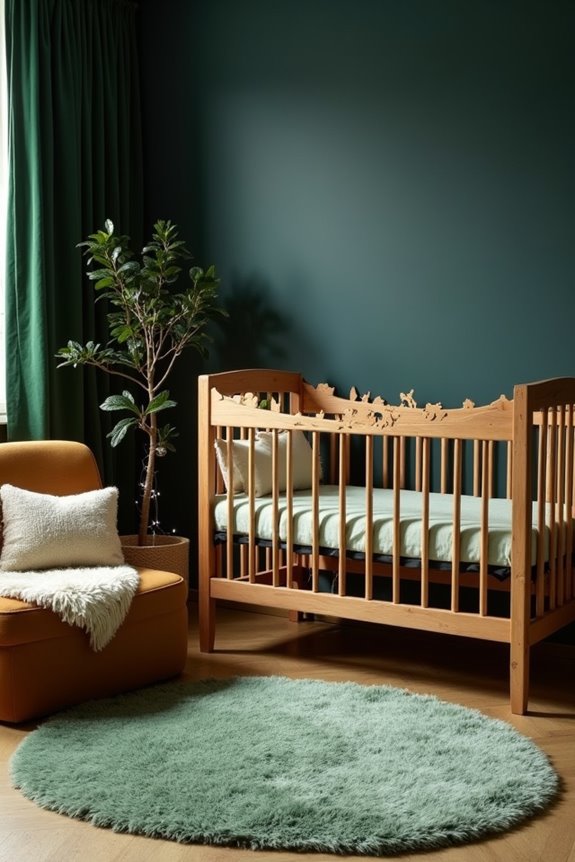
You’ll want to pick one bold furniture piece—like a vibrant blue rocking chair—that becomes your room’s anchor and naturally draws the eye. This piece works because it contrasts beautifully against white walls and furnishings, creating visual interest without making the space feel chaotic or overwhelming. The trick is balancing that pop of color or texture with a calm, cohesive design, so your bold piece complements rather than dominates the Where the Wild Things Are theme.
Bold Furniture As Focal Point
One bold piece of furniture can reshape a nursery. A bright blue rocking chair serves as your nursery’s primary visual anchor, creating visual interest you’ve been seeking. This bold furniture choice commands the entire room while keeping things gender-neutral and timeless.
Pair your statement furniture with white furnishings to visually enlarge the space and maintain calm vibes. The contrast makes your bold choice stand out without overwhelming the room. Consider two-tone fabric on your standout chair—it adds visual interest without competing for attention.
Back your primary visual anchor with a reclaimed wood accent wall behind the crib. This depth draws your eye exactly where you want it. Keep other décor subdued and cohesive so your bold furniture remains the room’s true centerpiece.
Color And Texture Impact
How does a single bold piece change an entire nursery? One standout accent piece—like a two-toned upholstered rocking chair—grounds your entire space right away. It’s your room’s anchor, drawing eyes and creating visual interest against predominantly white furnishings.
You’ll want to layer in texture throughout. Think reclaimed wood accent walls, soft fabrics, and natural elements like tree-branch mobiles. These tactile details make the room feel lived-in and timeless, not sterile.
Your color palette should stay intentional. Blue, yellow, and gray accents work well with white surfaces, keeping things calm while maintaining that Where the Wild Things Are vibe. The white actually expands your space visually, letting your accent piece stand out. That’s smart design working for you.
Balancing Statement With Cohesion
Now that you’ve got texture and color working together, it’s time to pick the single piece that’ll anchor everything. Your focal piece becomes the hero—think bright blue rocking chair or striking crib—while calm white surroundings keep things spacious. This contrast prevents your room from feeling cluttered or overwhelming.
| Focal Piece | Why It Works |
|---|---|
| Bright blue rocking chair | Creates a focus point, functional for bonding |
| Colorful crib | Instantly grabs attention, serves daily purpose |
| Patterned mobile | Draws eyes upward, supports visual interest |
| Bold wall art | Anchors design without taking floor space |
| Textured accent wall | Works with reclaimed wood, grounds aesthetic |
Pair whimsical accents—arrows, teepees, crowns—in muted tones around your focal piece. This strategy maintains balance. You’re creating a space that’s deliberate and organized. The result? A nursery that grows with your child while staying timelessly cool.
Add Rustic Accents to Soften Modern Lines
You’ll want to balance your modern nursery with natural wood elements—think reclaimed wood accent walls or floating shelves that ground the space without feeling heavy. Strategic placement of rustic textures, like a tree branch mobile or wooden picture frames, softens those clean lines and provides visual interest appropriate for your little one’s room. By mixing rough, natural materials with your bright white furniture and dark tones, you’re creating a nursery that feels both cozy and contemporary.
Natural Wood Elements Matter
Wood’s warm, organic texture is exactly what a modern nursery needs to feel less sterile and more inviting. You’ll create a space where your baby feels welcomed and peaceful.
Consider installing reclaimed wood as an accent wall behind the crib—it becomes your room’s focal point while adding depth. Pair this with crisp white furnishings to keep everything balanced and timeless. A single bold wood piece prevents the space from feeling overdone.
Rustic accents like branch mobiles or wooden frames echo the Where the Wild Things Are spirit without overwhelming the calm vibe you’re building. These natural wood elements soften those clean modern lines.
The key? Layer soft textiles and minimal decor around your wooden features. This approach preserves that uncluttered, peaceful aesthetic while making the nursery feel warm and like a true sanctuary for your little one.
Balancing Modern With Rustic
While a reclaimed wood accent wall gives your nursery that grounded, natural feel, pairing it with sleek modern pieces creates a balanced design. You’re creating a space that blends coziness with contemporary style—ideal for your Where the Wild Things Are nursery decor.
Start with white furniture as your clean base. Then layer in rustic touches: branch mobiles, raw wood shelves, and oatmeal-textured rugs. This rustic modern combination keeps things balanced without feeling cluttered.
| Element | Modern Match | Rustic Touch |
|---|---|---|
| Wall | White paint | Stained wood accent |
| Furniture | White crib | Wood frame details |
| Textiles | Crisp linen | Knobby woven rug |
Frame traditional Where the Wild Things Are illustrations in simple wooden frames. These pieces ground your design, blending old-world charm with contemporary styling.
Texture Through Strategic Placement
How do you make a modern nursery feel warm and inviting without cluttering it? Texture placement is an effective approach. A reclaimed wood accent wall behind the crib grounds the space and creates depth that softens sleek modern lines. This contrast pairs rustic warmth with clean white furnishings to maintain balance.
Your two-tone rocking chair becomes a focal point without overwhelming the calm aesthetic. The visual interest draws attention without creating disorder. Add a tree branch mobile overhead and Etsy printables on white walls to layer texture throughout the room.
This approach works because each decision is deliberate. Each textured element serves a purpose and has been positioned with consideration. You’re not randomly filling space—you’re building a cohesive sanctuary that feels both contemporary and naturally inviting. That’s what results from thoughtful design choices.
Limit Where the Wild Things Are Imagery to One Surface
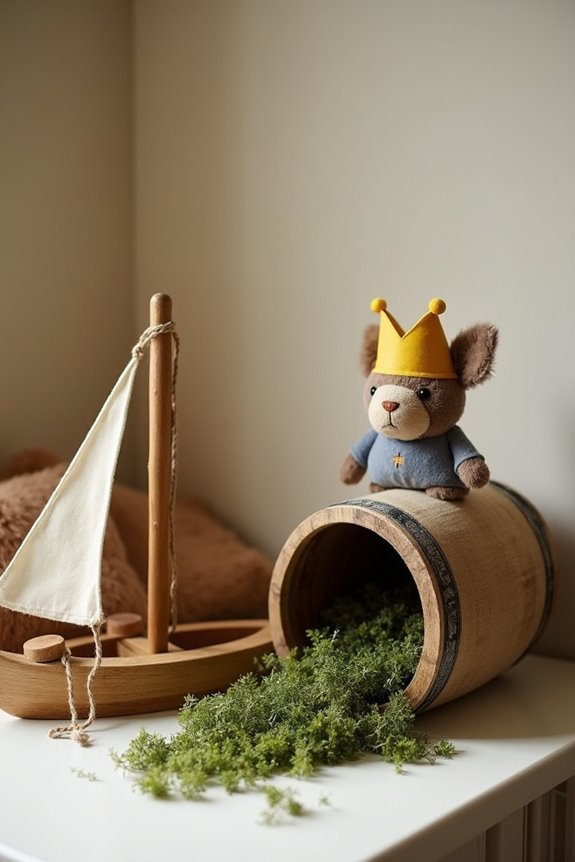
Ever noticed how a room can feel cluttered when you scatter themed decorations everywhere? You’ll create a calmer, more sophisticated nursery by concentrating your Where the Wild Things Are imagery on a single focal wall. This strategic approach lets you go bold with a mural, wallpaper, or large canvas featuring Max and his wild friends without overwhelming the space. Your other walls stay clean and white, which actually makes your wall stand out more. You’re creating a visual anchor that draws the eye naturally. This method gives you the best of both worlds: that magical storybook vibe you’re craving and a serene environment where your little one can rest peacefully. One powerful statement beats scattered clutter every time.
Layer Soft Textures to Add Warmth and Depth
Why does a room with just furniture feel so empty, but one filled with cozy layering feels lived-in? Nursery textures create comfort by combining a plush rug, knit throw, and soft upholstery that invite touch. Layer your bedding with varied fabrics—chunky knits against smooth cotton add visual interest and dimension. Add curtains with tactile appeal and wall hangings that soften hard surfaces. These layering choices balance your bold blue accent without overwhelming the room. Include wooden mobiles and fabric banners as subtle touches. This approach creates a nurturing environment where your little one feels surrounded by warmth—exactly what they need for peaceful sleep and joyful playtime.
Add Soft Lighting to Support Play and Rest
Your little one’s nursery can shift from a bright, energetic play zone into a calm, dreamy setting—all with the flip of a switch. Layer your soft lighting strategically throughout the space.
Install a dimmable pendant light above the crib as your main lighting source, creating that soothing atmosphere you need. Pair it with warm white bulbs (around 2700–3000K) that feel naturally cozy. Add a floor lamp by your glider for reading sessions, and include a gentle night light for those late-night moments.
This mix of ambient lighting gives you flexibility as your child grows. You’re not just decorating—you’re building an adaptable nursery that supports both playtime and restful sleep. Your little one will benefit from it.
Arrange Furniture to Balance Exploration and Calm
How you position each piece of furniture in your nursery affects the balance between a space that feels chaotic and one that feels organized.
You’ll want to create a nursery layout that keeps your little one engaged without overwhelming them. Keep larger white furniture pieces around the room’s perimeter to open up sightlines and maximize floor space. Position that bold rocking chair as your visual anchor—it’s a key decorative element that draws the eye.
Here’s how to create an exploration-friendly layout:
- Place the crib on the reclaimed wood accent wall as a focal point
- Position nature-inspired décor (arrows, animals, crowns) around room edges, away from the crib
- Leave open floor space for crawling and playing safely
- Arrange furniture to create natural pathways through the room
- Keep your calming space clutter-free by limiting additional colors elsewhere
This setup supports growth from infant to toddler stages without requiring changes.
Keep the Room Simple So It Grows With Your Child
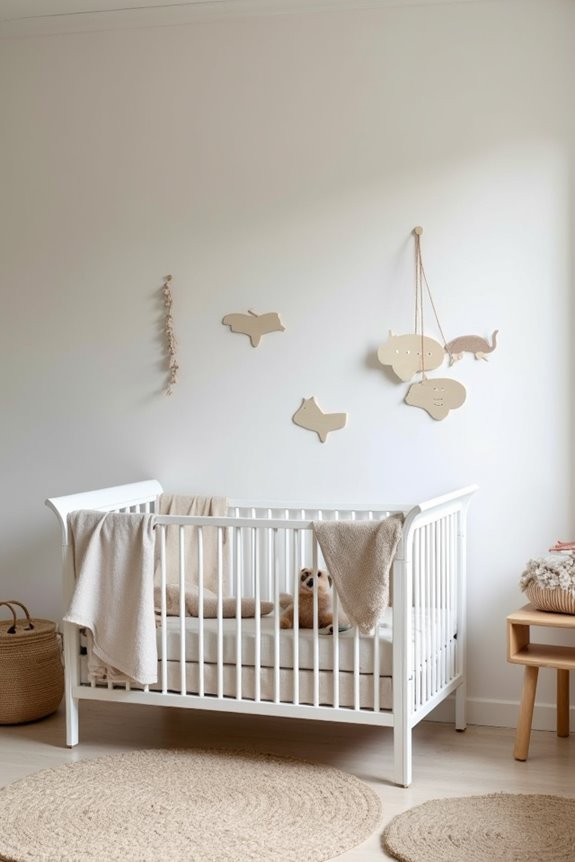
Your growth-friendly approach matters. Skip those busy, themed patterns that’ll feel dated fast. Instead, choose timeless designs that transition smoothly. Use two-tone upholstery and keep clutter minimal, creating a versatile backdrop that evolves with your child.
Adaptable decor works well for gradual updates. Printable art and modular storage let you refresh the room without major redesigns. Leave ample open wall space for future changes. You’re building a space that grows with them—not against them.