

Your bedroom and bathroom don’t need to be twins, but they should definitely feel like they belong together. Here’s how: pick one unifying element—maybe soft blues, warm wood tones, or brushed gold hardware—and repeat it across both spaces. This creates visual harmony without forcing identical décor everywhere.
Your bedroom can feel warm and inviting while your bathroom stays clean and refreshing. The key is intentional coordination, not copying. Stick with one design thread, and you’ll achieve that connected feeling your home’s been lacking—discover exactly how to make it work.
Do Your Bedroom and Bathroom Actually Have to Match?
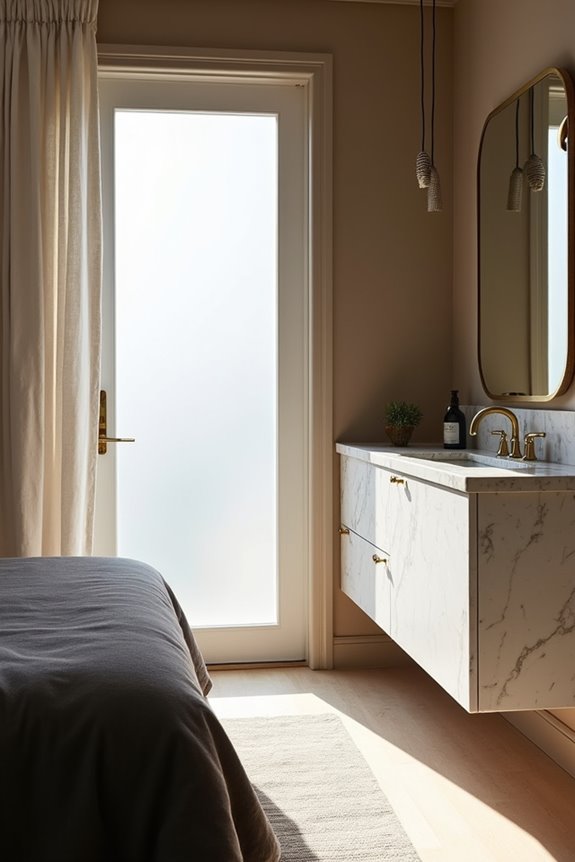
Why would your bedroom and bathroom need to look identical? Here’s the truth: they don’t. You can create cohesion without matching everything perfectly. Instead, think about shared elements like color palette or hardware that tie your spaces together naturally. These connecting details help your rooms feel like they belong in the same home.
You’ve got options. You could pair a warm, comfortable bedroom with a clean, spa-like bathroom and they’ll read as harmonious. Or you could embrace contrast deliberately—different moods work when you’re intentional about it. The key is using enough shared elements to create smooth transitions between rooms.
Don’t stress about identical décor. Focus on balance. Your spaces should feel like they’re in conversation, not like carbon copies. That’s where the real interest happens.
Coordination vs. Matching: Know the Real Difference
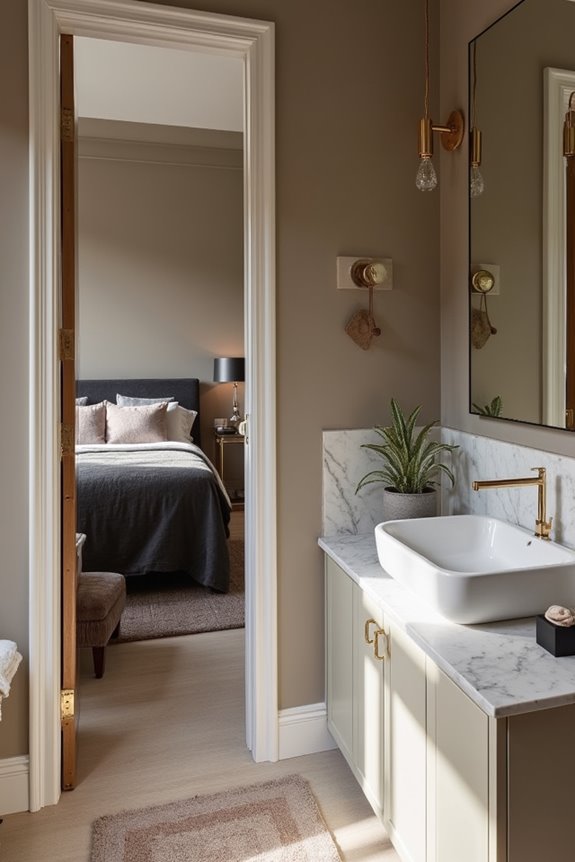
Matching is a strict uniform, but coordination is a vibe that connects two different outfits. You’re not forced to buy identical everything—that’d be boring anyway. Instead, you create visual harmony through shared elements like color accents, textures, or finishes that appear in both spaces.
Think of it this way: coordination lets your bedroom feel comfortable while your bathroom stays fresh and functional. You’re establishing cohesion without losing each room’s personality. A recurring sage green or consistent wood tones create that visual thread naturally.
Matching demands exact replication—same hardware, same décor, total uniformity. Coordination? It’s flexible. You’re building consistency through thoughtful choices rather than copying everything. This approach preserves what makes each space distinct while tying them together well.
How to Match Them: Color, Materials, and Style
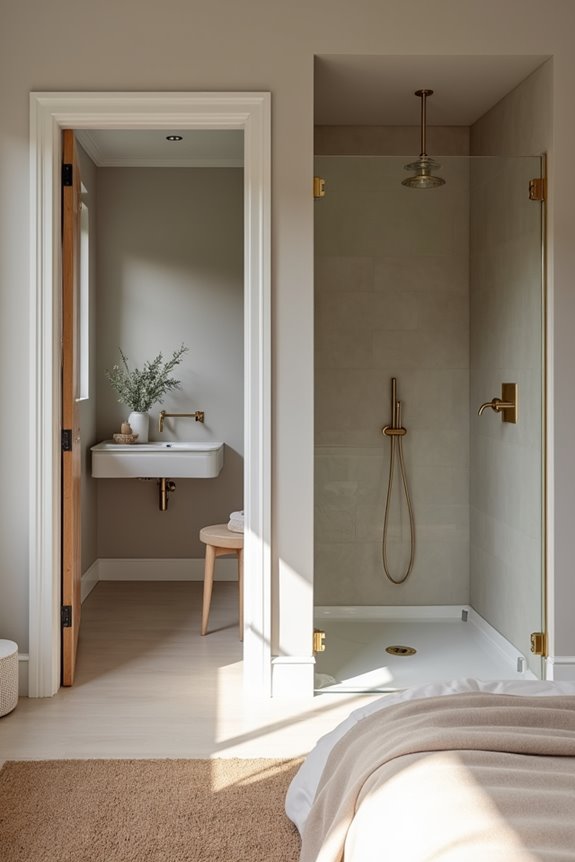
So you’ve decided to create that visual thread between your bedroom and bathroom—now what? Start with color. Pick a shared palette—think soft grays, warm whites, or calming blues—that flows naturally between spaces. Next, repeat materials and textures. If your bedroom features warm wood accents, bring similar wood elements into your bathroom vanity or shelving. Match your style too. Choose one design theme—modern, rustic, or minimal—and stick with it. Coordinate finishes on hardware and lighting fixtures. Brushed gold faucets paired with matching bedroom lamps create consistency. Finally, echo your bedroom’s mood. Want spa-like and peaceful? Carry that calm energy into your bathroom through soft lighting and neutral tones. You’re not copying exactly—you’re building a connected, welcoming home.
5 Bedroom-Bathroom Style Pairings That Coordinate
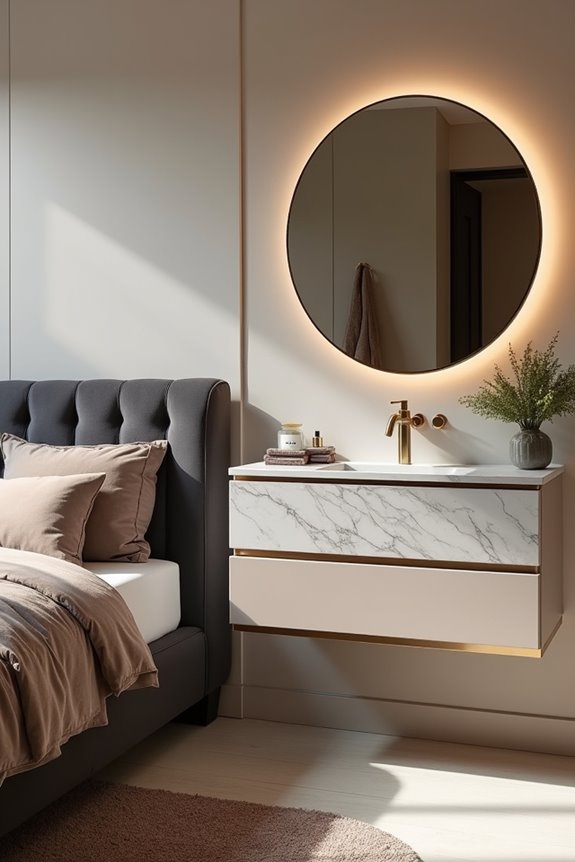
5 Bedroom-Bathroom Style Pairings That Coordinate
Now that you’ve got the basics down, let’s look at five style combinations that work together—and they’re straightforward to execute.
Modern Luxe pairs sleek bedroom furniture with spa-like bathroom finishes using gold hardware throughout. Scandinavian Calm uses light woods and whites across both spaces for a cohesive color palette. Organic Modern repeats natural stone and warm neutrals, creating texture repetition that connects the spaces.
Industrial Edge shares matte black fixtures and exposed brick elements as shared finishes. Finally, Coastal Retreat brings whitewashed wood and soft blues into your bedroom-bathroom style pairings.
Each design theme maintains harmonious decor while letting each room have its own character. You’re not creating identical twins—you’re building a unified home that actually feels like yours. That’s what matters.
Keep Spaces Distinct While Maintaining Visual Continuity
The key is reassessing regularly. You’re building rhythm and belonging, letting each room breathe while keeping everything harmoniously connected. That’s design done right.
Real Example: How Gold Accents Unified a Warm Bedroom and Serene Bathroom
Ever noticed how one small detail can tie an entire space together? Consider a master suite where the warm bedroom features deep, cozy tones paired with a bright, peaceful bathroom. Rather than matching everything perfectly, gold accents create connection here. Gold-finished fixtures, mirrors, and hardware appear throughout both rooms, establishing visual unity without demanding identical décor.
This design strategy works because it respects each room’s unique purpose. Your warm bedroom invites relaxation through rich colors and soft lighting. Your serene bathroom stays bright and energizing with lighter palettes. Yet those shared gold touches signal, “We belong together.”
The color contrast between spaces strengthens your master suite’s sophistication. You’re not forcing sameness; you’re weaving subtle threads that unite without overwhelming. That’s how you create a retreat that feels considered and connected to your needs.
Mistakes That Weaken the Flow (And How to Prevent Them)
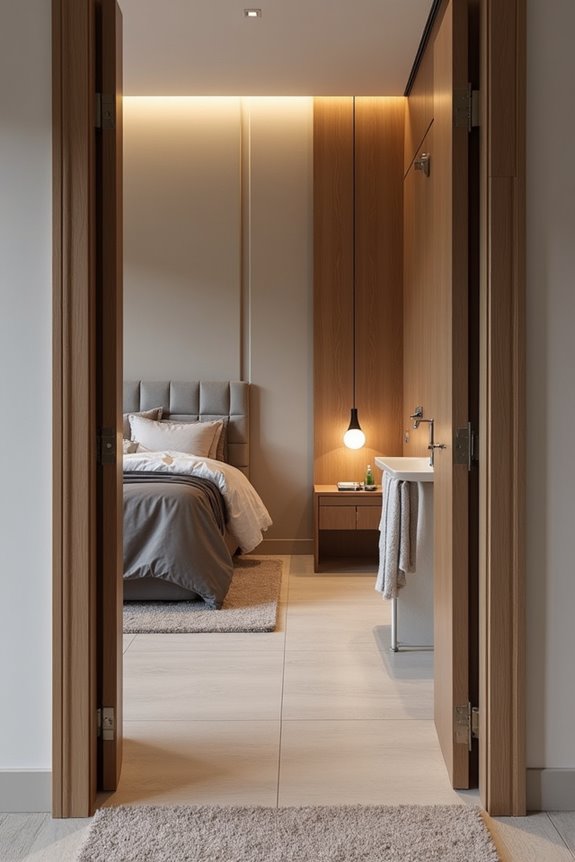
You’ll quickly notice when your bedroom’s warm terracotta walls clash with your bathroom’s icy blue tiles—it’s like wearing a cozy sweater with winter boots that don’t match your outfit. The trick is picking a shared color family (think warm neutrals or soft grays in the 2700–3000K lighting range) so both spaces feel connected rather than accidentally mismatched. By choosing complementary styles instead of identical ones, you’re creating harmony that works for how each room functions.
Clashing Color Choices
How’d you like it if your bedroom whispered calm while your bathroom screamed energy? That’s exactly what clashing color choices do to your primary suite.
When you pick opposing hues on the color wheel—say, warm peachy bedroom walls next to cool blue bathroom tiles—you’re actually breaking your space flow. These jarring transitions make the rooms fight instead of cooperate. Your eyes don’t know where to rest.
The real culprit? Inconsistent undertones. Warm golds paired with cool silvers on your hardware? Discordant mess. Heavily saturated jewel tones in one room with muted pastels in the other? Your design unity vanishes.
Instead, choose colors that share similar undertones. Warm creams flow into warm taupes. This harmony creates transitions that feel purposeful, not accidental. Your bathroom and bedroom become one unified story.
Disconnected Style Elements
What happens when your bedroom screams Victorian while your bathroom whispers ultra-modern? You’ve created disconnected style elements that fracture your suite’s cohesive flow.
The problem is clear: mixing design eras without intention leaves your spaces feeling disjointed. You’ll notice the jarring shift immediately—it disrupts the entire experience.
The solution? Establish shared decor principles. Maintain consistent color harmony through complementary palettes rather than clashing tones. Develop a lighting language using similar fixtures or warm color temperatures throughout both rooms. These small choices create continuity.
Think of it this way: your bedroom and bathroom should feel like they’re having a conversation, not arguing. When style elements speak the same language, your entire suite gains purpose and personality. That’s when spaces work together visually.
Where to Begin: Pick One Thing to Tie Them Together
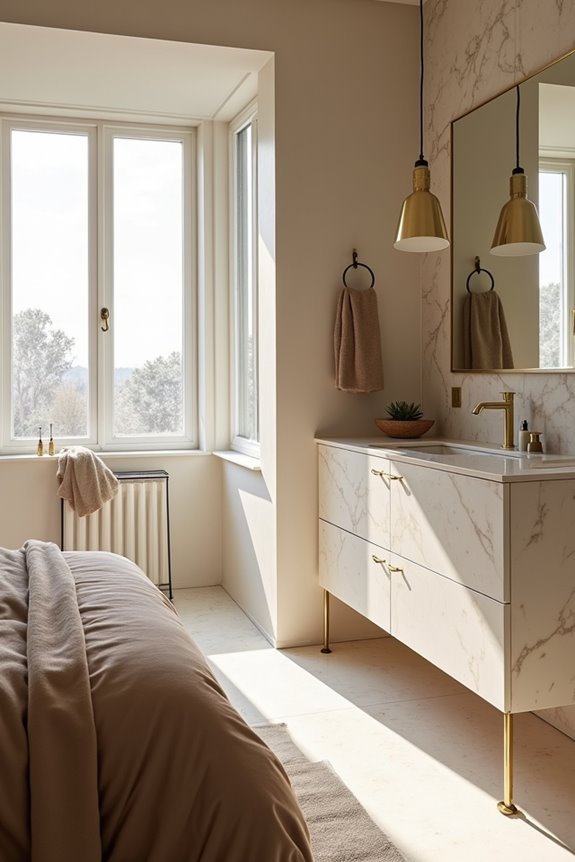
The key to connecting your bedroom and bathroom isn’t making them look identical—it’s finding one element they can share. Start by picking one thing: a shared color palette, repeated finishes, or matching lighting tones. This creates a cohesive link without feeling forced.
Maybe you choose warm brass hardware for both rooms’ fixtures and mirrors. Or you pick a neutral base—soft whites, warm grays, or natural stone—that grounds each space. Your bathroom’s shower tiles could echo your bedroom’s accent wall color. These small touches show visitors your spaces belong together.
The benefit? You’re not locked into identical décor. Your bathroom stays functional while your bedroom stays comfortable. That single unifying thread—whether it’s a design theme or texture—does all the work. Pick your one thing, and you’re done overthinking it.