Nope, you don’t need a theme to create a beautiful nursery. What actually matters? A calm color palette, quality basics, and pieces that grow with your kid.
Themes can shape mood and visual flow, but they’re optional—not essential. Skip the pressure to match everything perfectly.
Instead, build a flexible space with soft neutrals, meaningful textures, and a few lasting anchors.
Your room stays relevant as interests shift, budgets stretch further, and your child’s personality emerges.
Stick around to discover exactly how.
The Short Answer: Themes Are Optional, Not Essential
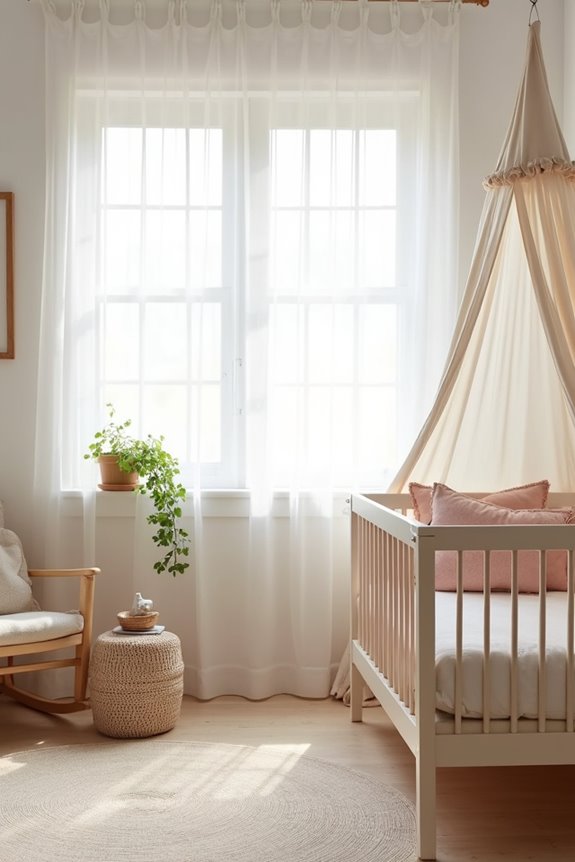
mood, color, and core essentials first. Choose a cohesive color palette—maybe soft blues and warm neutrals—then layer in decorative elements that feel right to you. This approach gives you flexibility and personal style without the pressure of matching everything perfectly. Your nursery can look polished and pulled-together simply by keeping colors consistent and adding details with purpose. The work is straightforward without needing any formal theme at all.
What Does a Nursery Theme Actually Do for Your Space?
When you pick a nursery theme, you’re not just making your space look organized—you’re actually shaping how your baby experiences the room every single day. A well-chosen theme creates visual flow that ties your crib bedding, wall colors, and accessories together, which means your eye doesn’t jump around feeling confused (and your baby’s developing brain benefits from that calm consistency too). Plus, themes influence mood and routines by setting the tone for everything from playtime imagination to those essential bedtime associations your little one needs.
Visual Cohesion and Flow
Why does a nursery with a clear theme feel so much more pulled-together than one without? A strong theme creates visual cohesion by anchoring your space with core elements like crib bedding and a consistent color palette. This foundation lets you layer coordinating wall art, textiles, and lighting that all work together.
Think of it like this: your color palette is your guide. Once you’ve chosen calming blues or nurturing pinks, every decor piece naturally aligns. You’re not randomly tossing in accessories—you’re strategically building flow.
Balance matters too. You’ll want one bold visual element, like a mural or large-scale print, paired with two or three supporting accents. This prevents clutter while keeping your theme strong. The result? A room that feels designed with intention and remains peaceful, reflecting your own vision.
Mood and Developmental Impact
Your nursery theme isn’t just about making the room look nice—it’s actually shaping how your baby feels and develops. A calming color like soft blue or gentle sage creates the right environment for sleep and bonding time. Your themed decor does serious work beyond aesthetics—it influences mood, anchors routines, and supports cognitive growth. When you commit to a cohesive theme, you’re building an environment where your baby’s brain can relax and develop naturally. Consistent thematic elements—from wall murals to textiles—establish rhythm and encourage imaginative play. The benefit? A space that supports relaxation during bedtime while subtly nurturing language and developmental milestones. Your thoughtful design choices become invisible teachers, quietly helping your little one thrive.
How Do Themes Influence Child Development and Mood?
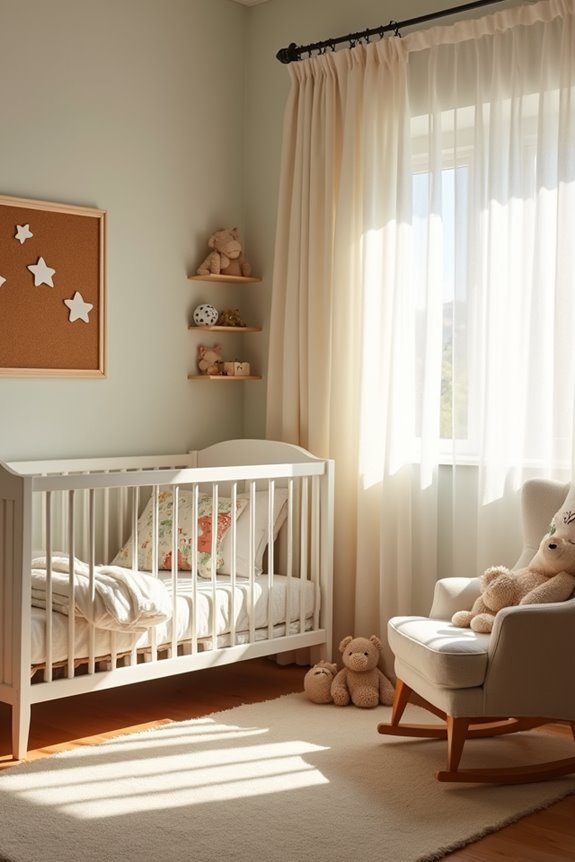
Have you ever noticed how a room’s colors and decorations can actually change how you feel?
Your nursery’s theme does exactly that. When you choose calming blues or soft greens, you’re literally telling your baby’s brain to relax. Warm pinks and peachy tones? They communicate nurturing vibes. This isn’t just pretty—it’s developmental science in action.
| Theme Color | Mood Impact | Development Goal | Sensory Element | Best For |
|---|---|---|---|---|
| Blue | Calming | Sleep routine | Cool tones | Rest periods |
| Pink | Nurturing | Emotional security | Soft textures | Bonding time |
| Green | Balanced | Focus | Natural motifs | Play exploration |
| Yellow | Stimulating | Energy | Bright patterns | Active learning |
| Neutral | Adaptable | Flexibility | Layered textures | Growing children |
Repeated patterns and themed motifs create predictability. Your child learns what’s coming next—playtime or sleep. That familiar elephant mobile? It becomes a comfort anchor. Themes build a structured environment where development happens naturally.
The Case for Skipping a Theme Entirely
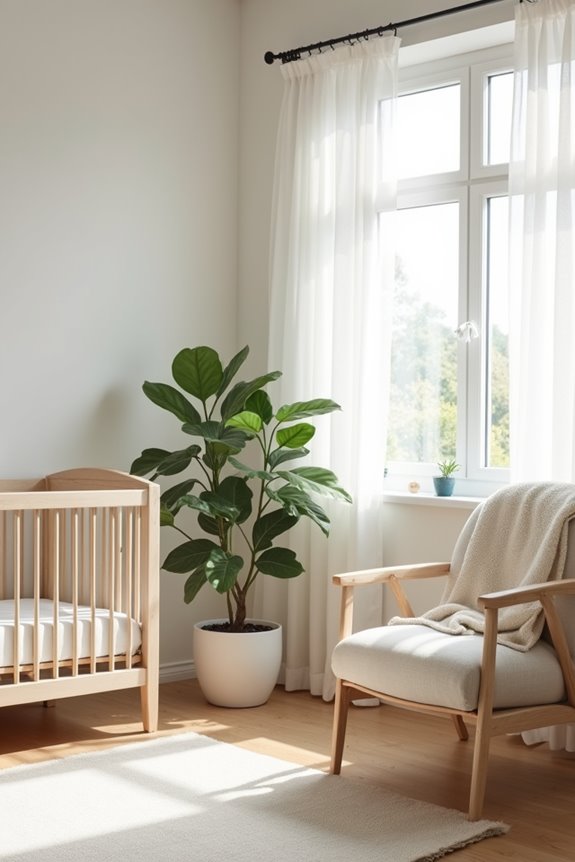
You don’t need an elaborate theme to create a beautiful nursery—in fact, skipping one altogether lets you build a space that’s simpler, more flexible, and easier on your budget. By sticking with 2–3 neutral colors and quality basics like a solid crib and timeless dresser, you’re designing a room that’ll actually work for your kid at three months, three years, and thirteen years without feeling outdated. Plus, you’ll save money now and later since you’re not swapping out themed bedding or wall decals every time your child’s interests shift.
Simplicity Over Design Complexity
What if you didn’t need a theme at all? You’d actually simplify everything. Skip the themed decorations and focus on what matters: soft colors, quality pieces, and personal touches that’ll grow with your child.
Here’s the thing—timeless design beats trendy themes every single time. Choose a calm palette like warm whites, soft grays, or gentle blues. Add cozy textiles, functional furniture, and a few meaningful items that reflect your family’s style.
This approach gives you versatility without the hassle. Your nursery won’t feel dated when your kid turns five. You’re building cohesion through simplicity, not complexity.
The best part? You’re not locked into anything. Add or swap pieces whenever you want. That’s the freedom a theme-free space actually gives you.
Flexibility As Baby Grows
Your nursery actually grows up with your kid instead of becoming a design dinosaur by age four. You’re skipping the pressure to commit to one specific aesthetic that’ll feel dated fast. Without a rigid cohesive theme, you adapt colors, furniture, and decor as your child’s interests shift. Maybe you start with calming blues for a newborn, then swap in greens as they grow. Safety stays non-negotiable—neutral walls give you flexibility to add age-appropriate touches. Your nursery moves from baby space to toddler room to kid’s bedroom without starting over. You’re building a space that actually listens to your child’s evolving personality instead of forcing them into a predetermined design box.
Budget-Friendly Decorating Approach
Most nurseries don’t need a theme to look pulled together—they just need a solid foundation. You can create a cohesive appearance by anchoring your design with calming colors and skipping expensive themed sets entirely. Start with foundational elements: soft walls, cozy textiles, and functional furniture. Then layer in affordable, changeable pieces like curtains and rugs gradually.
| Budget Strategy | Money-Saving Benefit |
|---|---|
| Versatile palette | Works as baby grows |
| Reused textiles | Reduces new purchases |
| Timeless patterns | Stays relevant longer |
| Gradual layering | Spreads costs over time |
| Multipurpose furniture | Serves multiple needs |
This approach means you’re not locked into cartoon characters or trendy prints. You’ll create a calm, welcoming space that actually fits your budget while feeling deliberate and attractive.
Timeless Nursery Design Foundations That Outlast Trends
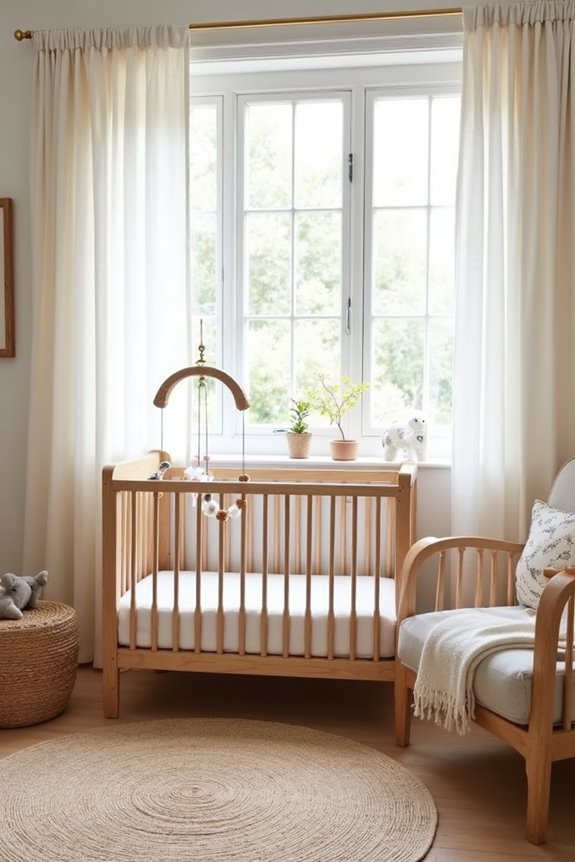
How do you create a nursery that’ll still look great when your kid’s a teenager?
Focus on foundations that grow with them. You’ll want to build your space around smart choices that actually last:
- Neutral palette as your base – Soft whites, warm grays, or gentle beiges give you flexibility to evolve décor without repainting
- Quality furniture over trendy pieces – Invest in solid wood dressers and cribs that transition through childhood stages
- Cohesive color palettes with depth – Layer complementary tones through textiles rather than relying on one bold theme
- Lasting textures and natural materials – Linen, wood, and wool have staying power that ages well
Your timeless design approach means you’re not chasing every trend. Instead, you’re building something genuine that’ll feel right at every age. Personal touches—photos, heirlooms, handmade items—create character that improves over time.
When Do Subtle Themes Work Better Than Full Concepts?
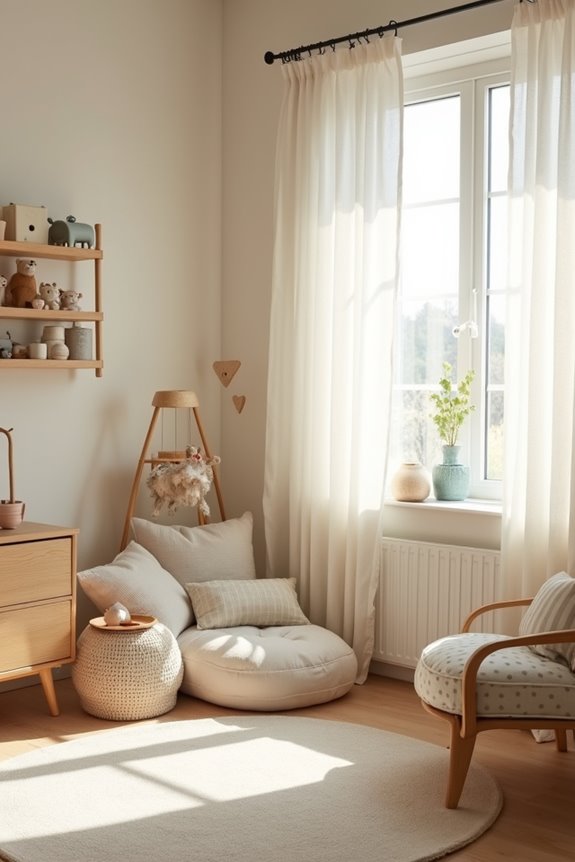
You’ll find subtle themes work well when you’re building a minimalist nursery that grows with your child, since a soft color palette and a few scattered motifs (think 3–4 small pieces repeating a symbol) won’t feel babyish in five years. Your style preferences naturally shift, so instead of committing to a bold jungle wallpaper, you can swap out accessories while keeping the calm foundation intact—making updates easier on your wallet and your design vision. This flexible approach means your nursery stays cohesive with the rest of your home, giving you freedom to evolve without starting from scratch.
Minimalist Design Approach
If you’re feeling overwhelmed by the idea of committing to a full nursery theme, there’s good news: subtle design works well and gives you way more flexibility.
A minimalist palette anchors your space without demanding constant decorating decisions. You’ll create cohesion by choosing neutral crib bedding as your foundation, then building around it thoughtfully. This approach keeps things calm while leaving room for your child to grow.
Here’s your roadmap:
- Select 3-4 colors maximum using the 60-30-10 rule for balance
- Choose soft textures and natural materials that add depth
- Use restrained motifs—think simple patterns, not busy designs
- Echo your home’s broader style for seamless integration
You’re not abandoning design entirely. You’re building a flexible sanctuary that grows with your child while maintaining the peaceful environment every family deserves.
Evolving Style Preferences
Why does committing to a full theme sometimes feel like you’re painting yourself into a corner?
Subtle themes work better because you’re building flexibility into your space. Start with a timeless foundation—think soft neutrals on walls and quality furniture pieces you’ll actually keep. From there, you layer in a cohesive color palette that feels right for your family. Maybe that’s sage green with warm whites, or soft blues with cream accents.
Here’s what works: mood-driven decor lets you shift as your kid grows. Playful touches come and go through swappable pillows and artwork, not permanent wall murals. Your adaptable themes grow with them, meaning no expensive redesigns when interests change. You’re not stuck—you’re creating a space that evolves naturally alongside your child’s personality.
The 3-Touch Rule: Just Enough Theme Without Overcommitting
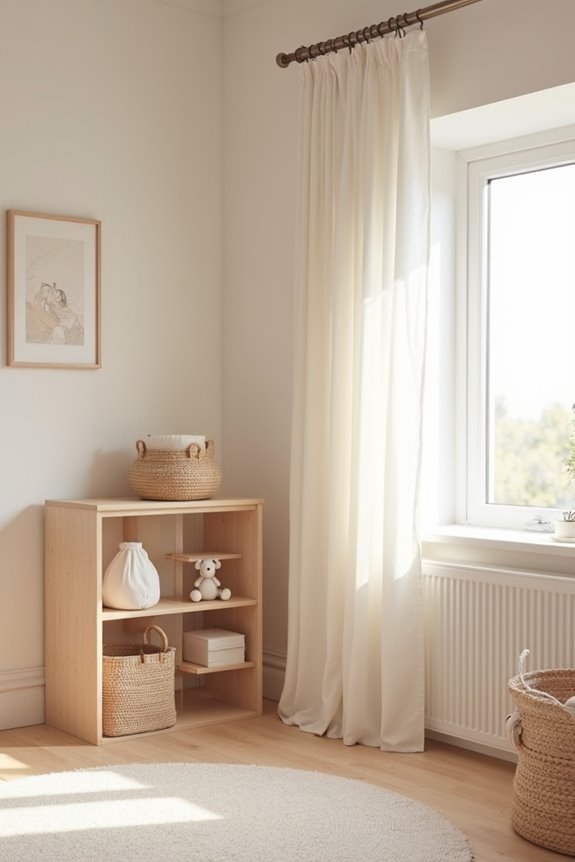
When you’re designing a nursery, the temptation to go all-in on a theme can be real—stuffed animals everywhere, matching curtains, coordinating wall decals, the works. The 3-touch rule offers a smarter approach. You’ll anchor your cohesive design with one major element, like crib bedding, then add just two complementary details—perhaps artwork and a textile. This nursery theme strategy keeps things feeling deliberate without overwhelming the space.
Here’s how to make it work:
- Choose one bold anchor piece that matches your vision
- Select two supporting details that echo your main element
- Repeat these motifs only 3–4 times across the room
- Leave breathing room for adaptable decor and future layers
You’ll create a space that feels polished and connected—without the “over-themed” vibe. Your nursery stays adaptable and genuinely yours.
Design a Cohesive Color Palette Without a Nursery Theme
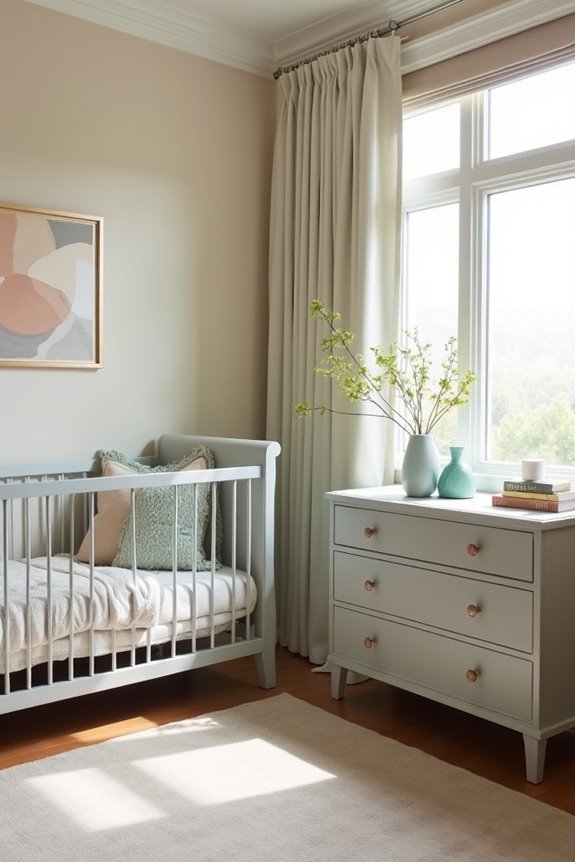
You don’t need a strict theme to create a nursery that looks intentional—just use the 60-30-10 color rule (dominant, secondary, accent) to build balance without boxing yourself in. Pick your favorite crib bedding, then layer in two or three supporting shades that work with it, giving you flexibility to swap out decor as your baby grows without starting over. This approach lets your personality show while keeping the room calm and balanced.
Color Balance Without Structure
How’d you like to create a nursery that feels perfectly pulled together—without committing to a full-blown theme?
You can totally do it with smart color balance. Start by picking a neutral palette for your walls—soft grays, warm whites, or gentle beiges ground the space beautifully. Then layer in personality through textiles and accessories using the 60-30-10 rule:
- Choose one dominant color (60%) for large pieces like curtains or a rug
- Add a secondary color (30%) through bedding or wall art
- Use accent colors (10%) in small decor items for pops of interest
- Repeat these colors across different textures to strengthen cohesion
This approach gives you flexibility as your child grows while maintaining visual harmony. Your nursery will look thoughtful and well-designed—no theme required.
Flexibility And Personal Expression
Why does your nursery have to pick a lane and stick with it forever? You don’t need a rigid theme to create something beautiful. Instead, anchor your room with neutral colors—soft whites, warm grays, or gentle beiges—as your foundation. This choice lets your personal expression shine without locking you in.
Build your cohesive color story by selecting 2–3 supporting shades and layering them across textiles, furniture, and decor. Your room stays unified without feeling themed or boring. Patterns and motifs can repeat subtly across pieces, reinforcing that connection.
The benefit? Adaptable decor grows with your child. Add sentimental items, family photos, or handmade touches that tell *your* story. Neutral walls and versatile textures mean you’ll refresh the space easily as your kid’s interests evolve—no theme overhauls required.
Use Texture and Sentiment Instead of Decor Concepts
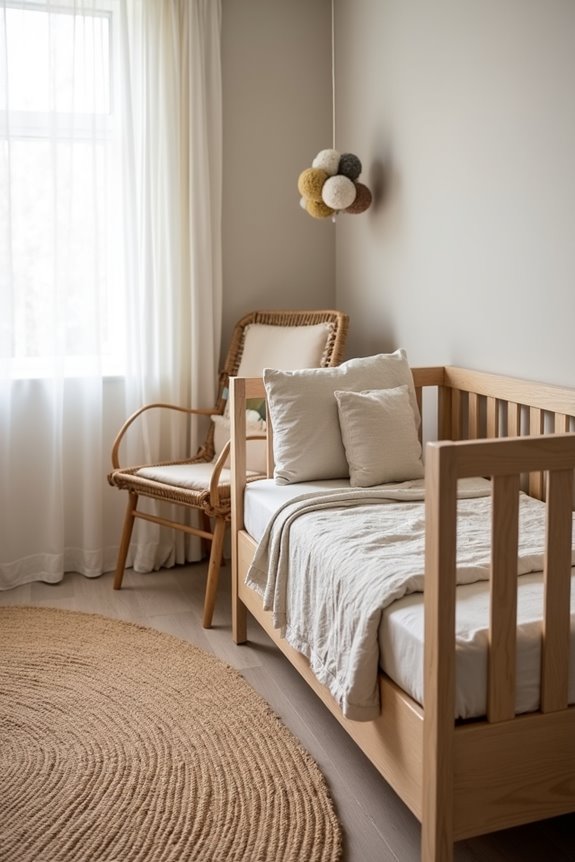
What if the best nursery design isn’t about picking a theme at all? Instead, you’re building something deeper—a space filled with textures and sentiment that actually matters to your family.
Skip the trendy decor concepts. Instead, layer in what makes you feel at home:
- Chunky knits, linen, and woven baskets create warmth without pretense
- Natural wood shelves and wool rugs ground the room with lasting quality
- Personal items—heirlooms, travel mementos, family photos—tell your unique story
- A gallery wall displays these meaningful pieces as subtle narrative anchors
This approach beats generic themes because your nursery ages well alongside your child. You’re not refreshing decor every season. You’re creating a genuine sanctuary where your family’s history lives, grows, and belongs.
How to Combine Two Themes Without Visual Chaos
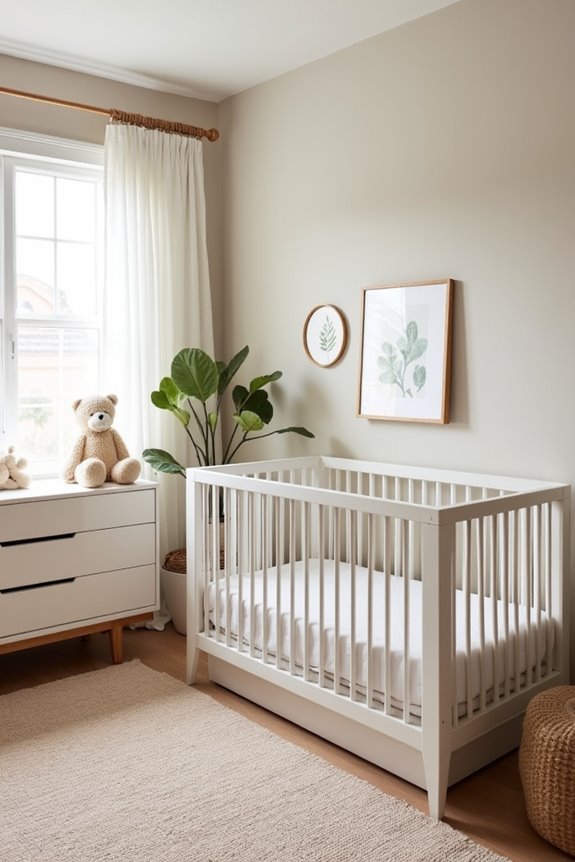
Maybe you’re torn between two totally different nursery vibes—say, minimalist modern and woodland cottage—and you’re wondering if you can actually make them work together. You can! Start by picking one theme as your anchor. Let’s say modern takes the lead with clean wall decor and simple lines. Then layer woodland elements through textiles: a soft tree-print blanket or leaf-patterned curtains. Your color palette becomes the glue holding everything together—think soft grays, warm whites, and sage green. These colors work for both styles. Repeat your motifs sparingly so things don’t clash. Use big visuals like paint or a simple mural to establish your primary theme, then let smaller accents—artwork and fabrics—whisper the secondary vibe. This mixing approach creates a calm space that reflects your style.
Nurseries That Grow as Your Child Does
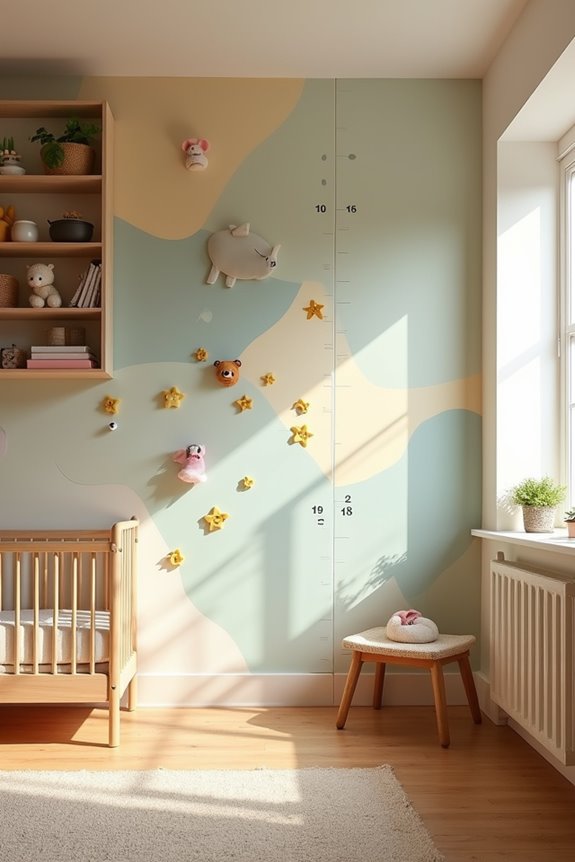
Once you’ve nailed your design—whether that’s blended themes or a single cohesive style—here’s what matters: building a room that actually works for years, not just months.
Building a room that works for years, not months—that’s the mark of truly smart design.
You’ll want your nursery to grow with your child by choosing versatile furniture and adaptable decor that shift alongside them. Here’s your strategy:
- Stick with neutral wall colors like soft grays or warm whites as your foundation
- Invest in quality, timeless furniture pieces that handle style updates
- Swap out textiles, art, and lighting seasonally without major overhauls
- Layer accessories thoughtfully so your room evolves naturally
This approach means you’re not redesigning constantly. Instead, you’re refreshing. Your child’s room moves from nursery to toddler space to tween haven—all while keeping the same core bones. That’s smart design that actually stays with your family.
Theme Ideas That Remain Practical as Tastes Evolve
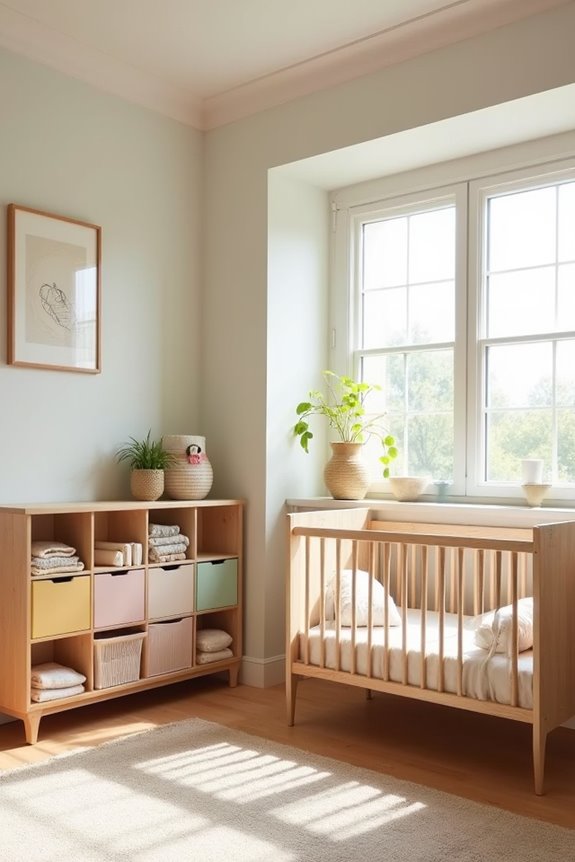
How do you pick a theme that’ll actually stick around instead of feeling babyish by next year?
Start with timeless foundations—quality furniture and neutral walls—so your theme can evolve without major overhauls. Choose an anchor color with 2–3 supporting shades that feel classic rather than trendy. This color scheme becomes your framework.
Use adaptable decor pieces like removable wallpaper or canvas art instead of permanent murals. Swap textiles and accessories easily as your child’s interests shift. Keep sentimental touches meaningful—a favorite book or collected item that grows with them.
Layer decor strategically. Big visuals like wallpaper set the mood, while smaller pieces adjust over time. When your kid’s taste changes from dinosaurs to space, you’re simply refreshing accents, not redesigning everything. Smart themes work with growth, not against it.
Common Mistakes Parents Make When Committing to a Theme
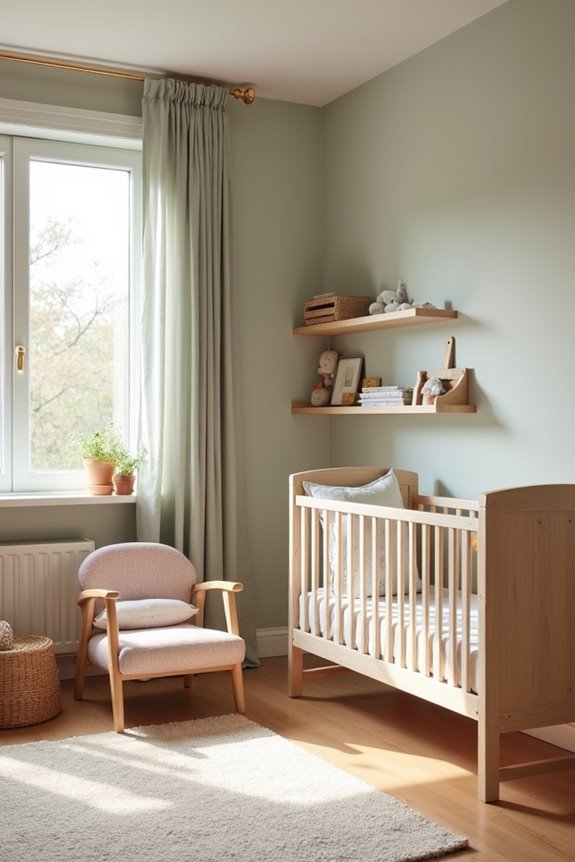
- Overloading motifs—Cramming too many decorative elements creates visual chaos that clashes and overwhelms your baby’s developing brain.
- Ignoring color psychology—Bright neons might seem fun, but soft pastels and muted tones actually promote calmness and better sleep.
- Skipping safety checks—Loose cords, unstable furniture, and small decorations pose real risks that require your attention.
- Choosing rigid, non-adaptable furniture—That themed crib bedding won’t work when your toddler graduates to a big kid bed.
The goal? Create a space that grows with your child while keeping things practical and peaceful.
A Warm, Lived-In Nursery Without Perfect Coordination
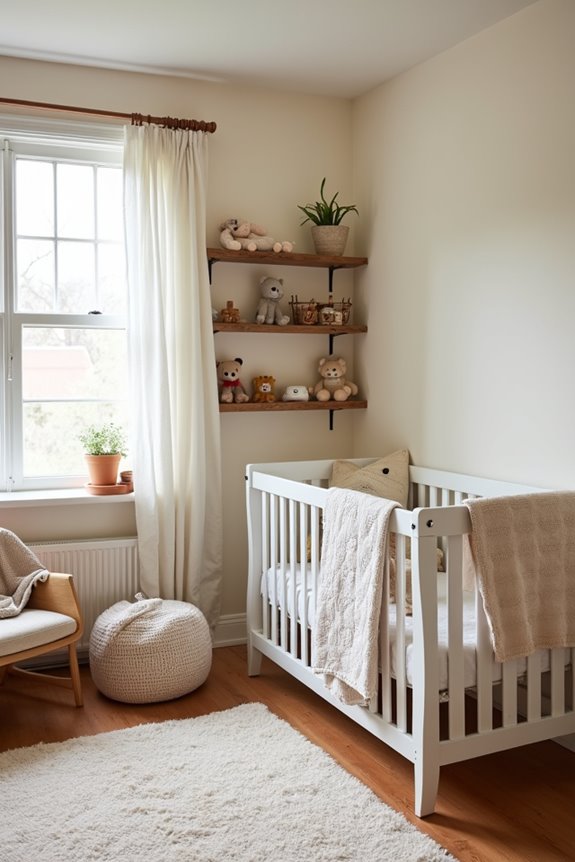
Forget the idea that your nursery needs matching everything—a crib set in one character, wall decals that coordinate perfectly, and furniture that all came from the same collection. You don’t need that pressure. Instead, build a color palette you love, then layer in texture with chunky knits, woven baskets, and wooden shelves. These pieces bring warmth without feeling matchy-matchy.
Here’s what works: weave in personal touches. Display a family heirloom, frame a travel photo, or showcase a meaningful memento. Repeat 3–4 subtle motifs throughout the space—maybe soft greens appear in a blanket, plant, and wall art. That repetition creates a cohesive mood naturally.
Your nursery becomes a real room, not a catalog page. It grows with your child and tells your family’s story.