
Start designing in your second trimester so you’re not cramming everything last-minute. Time big projects around life changes—new siblings, moves, or school entry—when you’re already in refresh mode. Skip the chaos months packed with holidays and transitions. Invest upfront in convertible cribs and adjustable shelving that grow with your kid, saving you money later. Use neutral walls with swappable accents and labeled storage that adapt as your child changes. Stick around to discover exactly how to nail each phase.
Start Early: Plan for Growth From Newborn to School Age
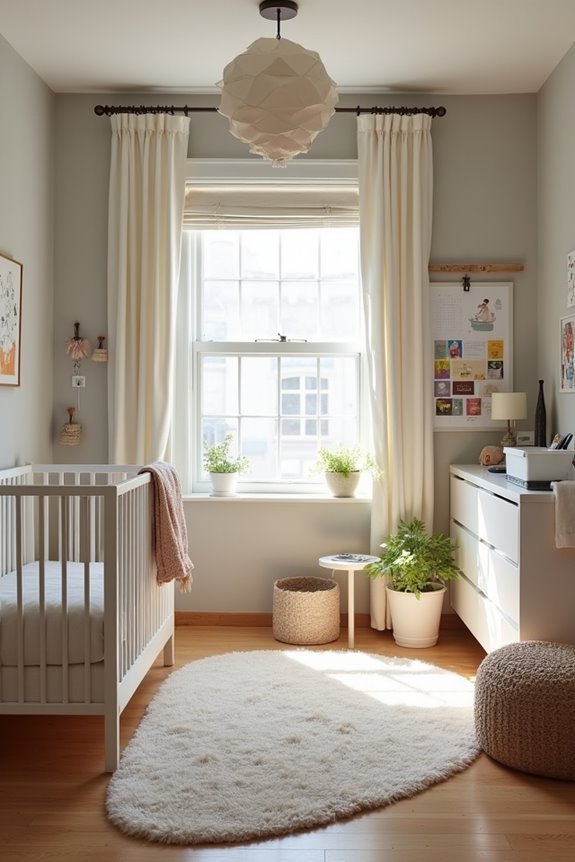
When should you actually start designing your nursery? The second trimester is your sweet spot. Starting early lets you plan for growth from newborn through school age without rushing.
The second trimester is your sweet spot to start designing a nursery that grows with your child.
You’ll build your room gradually, spreading furniture purchases and decor choices over months. This approach reduces stress and prevents costly reworking later. Begin by establishing milestones for core needs: a safe sleep space, changing station, and feeding area. These foundations matter most.
Next, invest in convertible furniture—cribs that become toddler beds, adjustable shelving that grows with your child. Smart storage solutions keep essentials organized while your room layout adapts to changing needs.
Safety comes first, always. Finalize aesthetics and finishing touches once functionality is solid. This measured approach creates a nursery that truly evolves with your child, giving you peace of mind.
Align Design Timing With Major Life Changes (New Sibling, Moves, School Entry)
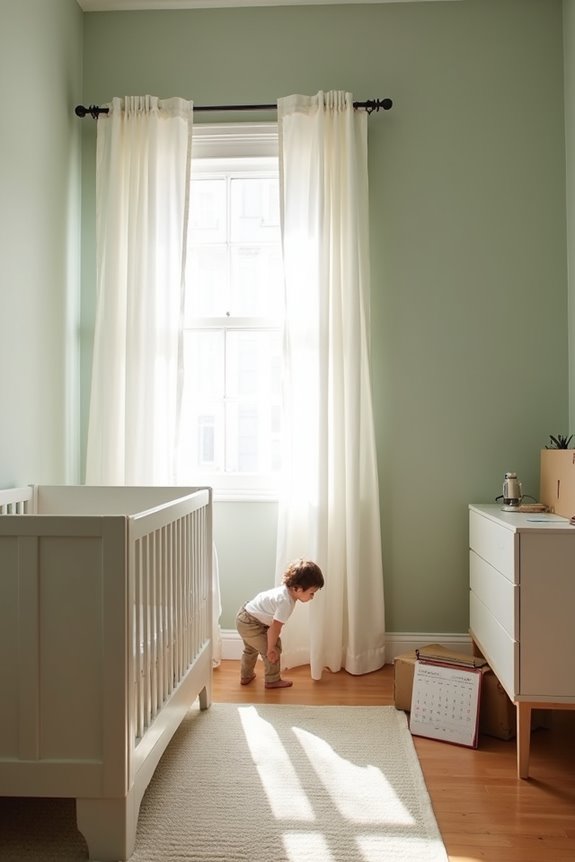
Life’s big moments—a new sibling arriving, packing up for a move, or your child starting school—are actually practical times to rethink your nursery design. You’re already in nesting mode, so why not tackle a room refresh simultaneously? When you’re reorganizing anyway, adjusting your layout for evolving routines becomes natural. Consider phased furniture like convertible cribs and adjustable shelving that grow with your kiddo. A move demands nesting and layout reassessment, letting you optimize safety and flow from scratch. Adding a sibling? Rebalance your zones—sleeping, feeding, changing—to accommodate two kids smoothly. School entry signals your child’s next chapter, suggesting you refresh the space for new needs. This nursery design timing strategy reduces stress and keeps your room functional through every milestone.
Schedule Around Your Family’s Busiest Seasons and Transitions

Timing your nursery project isn’t just about picking a convenient weekend—it’s about reading your family’s calendar. You’ll want to avoid those chaos months when everything happens at once. Planning your nursery setup during calmer seasons means you’re not juggling holidays, moves, or returning to work all at the same time.
| Busy Season | Best Action |
|---|---|
| Holiday months | Pause major assembly |
| Moving periods | Delay furniture delivery |
| School transitions | Start early planning |
| Work returns | Use incremental setup |
Use a spaced rollout approach instead. Start measuring and laying out your space when life’s quieter. Assemble essential furniture like the changing table and sleep zone first. Save decorative touches for later. This timeline keeps your nursery project manageable while maintaining safety-first priorities. Your future self will appreciate coordinating with life’s natural rhythms.
Front-Load Investment in Pieces That Grow With Your Child
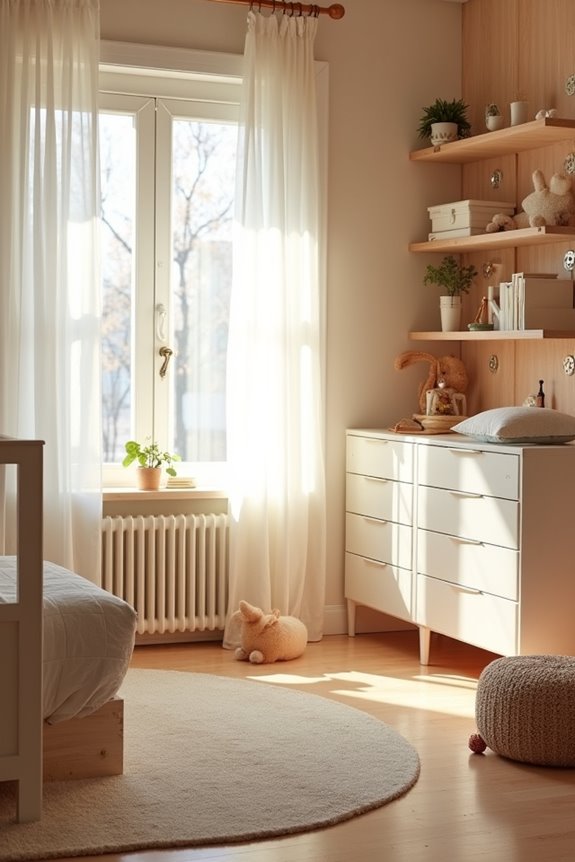
Why spend money twice when you can spend it once—smartly? You’re making a long-term investment when you choose growth-friendly pieces that evolve with your child. A convertible crib moves from newborn bed to toddler frame—that’s years of use from one purchase. Modular furniture and open shelving adapt as your nursery zones shift from changing stations to play areas. Select durable textiles that handle spills and washings without fading. Neutral walls pair beautifully with adaptable accents like swappable lighting and textile colors. Labeled bins within your shelving system grow from storing diapers to organizing toys to school supplies. This strategic approach means your nursery actually improves with time rather than feeling outdated. Smart timing isn’t just about scheduling—it’s choosing pieces that work harder for your family’s future.
Choose Adaptable Layouts So You Skip a Full Redesign Later
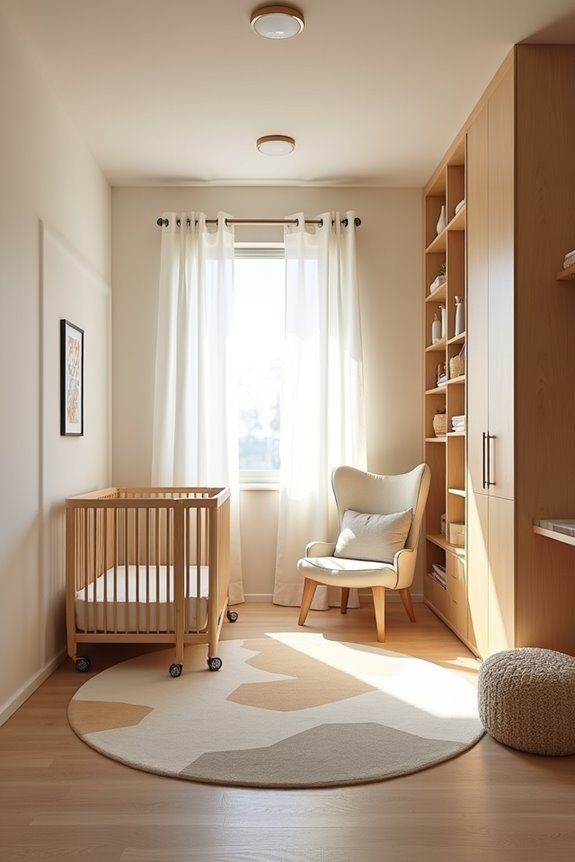
You’ve picked pieces built to last—now it’s time to arrange them in a way that lasts too. Smart nursery layouts plan zones upfront: sleeping, changing, and playing areas that adapt as your kiddo grows. Position your convertible crib and changing table for easy access without major traffic jams. This setup prevents expensive redesigns later. Choose modular furniture and versatile storage that shift locations effortlessly. Think adjustable shelving that moves from diaper station to toy organizer. Use neutral base colors and timeless patterns—they’re your design safety net. When tastes change, you’ll update accents, not everything. Start these growth-ready decisions during second-trimester milestones. Spreading tasks across months beats last-minute scrambling. Your future self will appreciate the flexibility built into your space.